
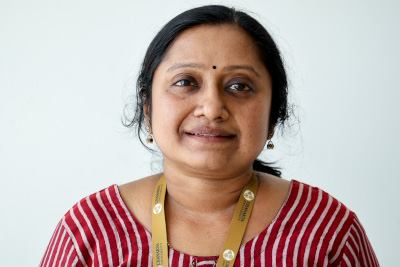
Sumi S
Ph.D., Sree Chitra Tirunal Institute for Medical Sciences & TechnologyAssociate Professor, School of Biosciences
Sumi S
Ph.D., Sree Chitra Tirunal Institute for Medical Sciences & Technology
Durve Ajay
Project AssistantThe central theme of my research is to delineate the molecular mechanisms involved in vascular diseases for predictive marker discovery and drug target identification. Currently, I focus on the rare disease, brain arteriovenous malformations (bAVMs) that are vascular tangles characterized by direct arterial to venous shunts that when ruptured can cause catastrophic intracranial hemorrhage. The aetiopathogenesis of this disease is unknown and hence the disease management is vastly limited by invasive corrective surgeries. I promote a vision where mechanoregulation, inflammation, and endothelial plasticity serve as avenues for identifying novel pharmacological therapeutic strategies and minimally invasive biomarkers for early risk stratification in bAVMs. With a multidisciplinary approach spanning mechanomics, epigenetics, and pharmacology, my group bridges basic disease biology with actionable models for drug rescue.
Similarly, I have identified several non-invasive pharmacological regulators for stabilizing venous walls and disease reversal in varicose veins. Varicose veins, a type of chronic venous insufficiency, are often misconceived as minor cosmetic issues. However, they represent a widespread, chronic vascular condition with major societal consequences such as chronic morbidity, high healthcare costs, and unequal access to care. Varicose veins are highly prevalent, with no scientifically approved treatment, except obliteration of affected veins. My research integrates clinical vascular specimens, microfluidic shear platforms, endothelial cell models and multi-omics to recreate and deconstruct pathogenic hemodynamic environments in vascular diseases such as bAVMs and varicose veins. My findings highlight two mechanotherapeutic strategies such as BMPSMAD blockade and ETSNotch axis inhibition, as promising leads for non-surgical treatment of varicose veins. Our integrated, multimodal approach hold promise for developing causal therapies that go beyond surgical resection, toward molecular regulation and vascular stabilization essential for disease management.
Sumi has taught at Chanakya University’s School of Biosciences since February 2025. With over 20 years of experience in disease biology, she brings deep expertise in vascular research, diabetes biology, and translational pathophysiology.
She was a Scientist at DBT-Rajiv Gandhi Centre for Biotechnology (RGCB) before transitioning to academia with Chanakya University’s bioscience program. Sumi has an extensive publication record, with highly cited research articles in several high-impact international journals, including: such as Cellular and Molecular Life Sciences, Cellular & Molecular Biology Letters, Journal of Neuroinflammation, Cells, Stroke, Nature-Laboratory Investigation, etc, as well as widely read review articles and book chapters in global volumes.
As Principal Investigator, she has led numerous extramural research projects funded by major national agencies, including SERB, ICMR, KSCSTE, and NRF, driving forward research on mechanobiology, epigenetic regulation, and vascular disease pathogenesis.
From 2014 to 2024, Dr. Sumi served as faculty instructor for advanced Ph.D. coursework in cardiovascular disease biology and genetics at RGCB. In addition, she taught in RGCB’s M.Sc. Biotechnology program (affiliated with RCB, Faridabad) starting in 2019 and assumed the role of Assistant Course Coordinator for the MSc program from 2022 until January 2025.
- Ph.D., Sree Chitra Tirunal Institute for Medical Sciences & Technology
- Post-doc: DBT-Rajiv Gandhi Centre for Biotechnology (RGCB), Thiruvananthapuram
Peer reviewed journal articles
- Karthika CL, Ahalya S, Sreelakshmi BJ, Mahendra Seervi, Kalpana SR, Sumi S. “Flow-dependent NRF2 dysfunction via KEAP1/WDR23 dual repression contributes to endothelial oxidative damage in venous disease”. Biomedicine & Pharmacotherapy. 2026; 196: 119152. doi.org/10.1016/j.biopha.2026.
119152. - S. Ahalya, C. L. Karthika, B. J. Sreelakshmi, S. R. Kalpana & S. Sumi, “Altered venous flow drives endothelial to mesenchymal transition in varicose veins by suppressing PIEZO1KLF2 signaling,” Cellular and Molecular Life Sciences, In press 2025.
- B. J. Sreelakshmi, C. L. Karthika, S. Ahalya, S. R. Kalpana, C. C. Kartha & S. Sumi, “Mechanoresponsive ETS1 causes endothelial dysfunction and arterialization in varicose veins via NOTCH4/DLL4 signaling,” Eur. J. Cell Biol., vol. 103, art. no. 151420, Jul 2024. doi: 10.1016/j.ejcb.2024.151420.
- C. L. Karthika, V. Venugopal, B. J. Sreelakshmi, S. Krithika, J. M. Thomas, M. Abraham, C. C. Kartha, A. Rajavelu & S. Sumi, “Oscillatory shear stress modulates Notchmediated endothelial mesenchymal plasticity in cerebral arteriovenous malformations,” Cell. Mol. Biol. Lett., vol. 28, no. 22, 2023. doi: 10.1186/s11658-023-00436-x.
- J. M. Thomas, D. Sasarkan, M. Abraham, S. Sumi, C. C. Kartha & A. Rajavelu, “DNA methylation signatures on vascular differentiation genes are aberrant in vessels of human cerebral arteriovenous malformation nidus,” Clin. Epigenetics, vol. 14, art. 127, 2022. doi: 10.1186/s13148-022-01346-z .
- V. Venugopal & S. Sumi, “Molecular biomarkers and drug targets in brain arteriovenous and cavernous malformations: where are we?” Stroke, vol. 53, no. 1, pp. 279–289, 2022. doi:10.1161/STROKEAHA.121.035654.
- C. L. Karthika, S. Ahalya, V. Beena, S. S. Binil Raj, B. Lakkappa, R. Kalyani, N. Radhakrishnan, S. R. Kalpana, C. C. Kartha & S. Sumi, “Shear stress alterations activate BMP4/pSMAD5 signaling and induce endothelial mesenchymal transition in varicose veins,” Cells, vol. 10, no. 12, art. 3563, 2021. doi:10.3390/cells10123563.
- A. Verma, S. Sumi & M. Seervi, “Heat shock proteinsdriven stress granule dynamics: yet another avenue for cell survival,” Apoptosis, vol. 26, no. 7–8, pp. 371–384, 2021. doi: 10.1007/s10495-021-01678-w.
- J. M. Thomas, D. Sasarkan, S. Sumi, M. Abraham, A. Rajavelu & C. C. Kartha, “Aberrant regulation of retinoic acid signaling genes in cerebral arteriovenous malformation nidus and neighbouring astrocytes,” J. Neuroinflammation, vol. 18, art. 61, 2021. doi: 10.1186/s12974-021-02094-2.
- C. L. Karthika, S. Ahalya, N. Radhakrishnan, C. C. Kartha & S. Sumi, “Hemodynamics mediated epigenetic regulators in the pathogenesis of vascular diseases,” Mol. Cell. Biochem., vol. 476, pp. 125–143, 2021. doi: 10.1007/s11010-020-03890-9.
- S. Krithika & S. Sumi, “Neurovascular inflammation in the pathogenesis of brain arteriovenous malformations,” J. Cell. Physiol., vol. 236, no. 7, pp. 4841–4856, 2021. doi: 10.1002/jcp.30226.
- M. Seervi, S. Sumi, A. Chandrasekharan, A. K. Sharma & T. R. Santhosh Kumar, “Molecular profiling of anastatic cancer cells: potential role of the nuclear export pathway,” Cell. Oncol., vol. 42, no. 5, pp. 645–661, 2019. doi: 10.1007/s13402-019-00451-1.
- J. M. Thomas, S. Sumi, M. Abraham, D. Sasakan, S. Bhaadri, A. Rajavelu & C. C. Kartha,
“Gene expression analysis of nidus of cerebral arteriovenous malformations reveals vascular structures with deficient differentiation and maturation,” PLoS ONE, vol. 13, no. 6, e0198617, 2018. doi: 10.1371/journal.pone.0198617. - N. Radhakrishnan, D. George, R. Jayakrishnan, S. Sumi & C. C. Kartha, “Vein size and disease severity in chronic venous diseases,” Int. J. Angiol., vol. 27, no. 4, pp. 185–189, Dec. 2018. doi: 10.1055/s-0038-1639355.
- S. Sumi, S. Ramachandran, V. Raman Kutty, M. M. Patel, A. T. N., A. Mullassari & C. C. Kartha,
“ENPP1 121Q functional variant enhances susceptibility to coronary artery disease in South Indian patients with type 2 diabetes mellitus,” Mol. Cell. Biochem., vol. 435, pp. 67–72, 2017. doi: 10.1007/s11010-017-3057-2. - J. M. Thomas, S. Sumi, M. Abraham, A. Rajavelu & C. C. Kartha, “Genetic and epigenetic mechanisms in the development of arteriovenous malformations in the brain,” Clin. Epigenetics, vol. 8, art. 78, 2016. doi: 10.1186/s13148-016-0248-8.
- S. Sumi, S. R. Kalpana, A. Suresh, S. S. Binil Raj, B. Lakkappa, G. Kamalapurkar, N. Radhakrishnan & C. C. Kartha, “Arterialization and anomalous vein wall remodeling in varicose veins is associated with upregulated FoxC2Dll4 pathway,” Lab. Invest., vol. 96, no. 4, pp. 399–408, Apr. 2016. doi: 10.1038/labinvest.2015.167.
- A. Vinitha, V. Raman Kutty, A. Vivekanand, G. Reshmi, G. Divya, S. Sumi, K. R. Santosh, N. S. Pratapachandran, A. Mullassari, C. C. Kartha & S. Ramachandran, “PPIA rs6850: A > G singlenucleotide polymorphism is associated with raised plasma cyclophilin A levels in patients with coronary artery disease,” Mol. Cell. Biochem., vol. 412, no. 12, pp. 259–268, Jan. 2016. doi: 10.1007/s11010-015-2632-7.
- S. Sumi, S. Ramachandran, V. Raman Kutty, M. M. Patel, A. T. N., A. Mullassari & C. C. Kartha,
“Nonsynonymous T280M gene variant of CX3CR1 in South Indian population is associated with reduced risk for vascular disease in patients with diabetes mellitus,” Curr. Res. Cardiol., vol. 2, no. 4, pp. 188–192, 2015. - S. Sumi, A. G., N. Radhakrishnan Nair, S. R. Kalpana, H. Divya Nair, V. T. Jissa, B. L. Ravikumar, G. Kamalapurkar & C. C. Kartha, “Forkhead box C2 promoter variant c. 512C >T is associated with increased susceptibility to chronic venous diseases,” PLoS ONE, vol. 9, no. 3, e90682, 2014. doi: 10.1371/journal.pone.0090682.
- S. Sumi & V. V. Radhakrishnan, “Diagnostic significance of humoral immune responses to recombinant antigens of Mycobacterium tuberculosis in patients with pleural tuberculosis,” J. Clin. Lab. Anal., vol. 24, pp. 283–288, 2010. doi: 10.1002/jcla.20401.
- S. Sumi, G. Madhavilatha, S. Mundayoor, A. Mathai & V. V. Radhakrishnan, “Assessment of four recombinant mycobacterial antigens as serodiagnostic markers for pulmonary tuberculosis,” J. Clin. Med. Res., vol. 1, no. 3, pp. 35–40, 2009. doi: 10.5897/JCMR.
- S. Sumi & V. V. Radhakrishnan, “Evaluation of immunohistochemistry with a panel of antibodies against recombinant mycobacterial antigens for the diagnosis of tuberculous lymphadenitis,” Int. J. Med. Med. Sci., vol. 1, no. 5, pp. 215–219, 2009. doi: 10.5897/IJMMS.
- Y. Anie, S. Sumi, P. Varghese, L. G. Madhavi, M. Sathish & V. V. Radhakrishnan, “Diagnostic approaches in patients with tuberculous pleural effusion,” Diagn. Microbiol. Infect. Dis., vol. 59, no. 4, pp. 389–394, 2007. doi: 10.1016/j.diagmicrobio.2007.06.022.
- J. Roy, S. Sumi, K. Sangeetha & T. E. Abraham, “Chemical modification and immobilization of Papain,” J. Chem. Technol. Biotechnol., vol. 80, pp. 184–188, 2004. doi: 10.1002/jctb.1177.
Book Chapters
- S. Sumi and C. C. Kartha, “Genetic and Epigenetic Regulation by Gut Microbe‑Modulated Metabolites in Chronic Metabolic Diseases,” in Human Microbiome, S. Thomas, Ed. Singapore: Springer, 2022, pp. 109–127, doi: 10.1007/978‑981‑16‑7672‑7_5.
- S. Sumi and C. C. Kartha, “Role of Non‑coding RNAs in Vascular Complications of Diabetes Mellitus,” in Mechanisms of Vascular Defects in Diabetes Mellitus, Advances in Biochemistry in Health and Disease, v. 17, C. C. Kartha, S. Ramachandran, and M. R. Pillai, Eds. Cham, Switzerland: Springer, 2017, pp. 341–357, doi: 10.1007/978‑3‑319‑60324‑7_15.
- S. Sumi, A. Mathai, and V. V. Radhakrishnan, “Dot‑Immunobinding Assay,” in Methods in Molecular Biology, vol. 1312, B. T. Kurien and R. H. Scofield, Eds. Totowa, NJ, USA: Humana Press, 2015, pp. 105–108, doi: 10.1007/978‑1‑4939‑2694‑7_14.
- A. Mathai, M. G. Sumi, S. Sumi, Y. Anie, and V. V. Radhakrishnan, “Immunology of Neurotuberculosis,” in Reviews in Neurology, A. B. Taly and G. Singh, Eds. Indian Academy of Neurology, 2009, pp. 265–294.
Project 1:
- Title: Piezo-KLF2 axis in endothelial dysfunction and venous wall remodelling in varicose veins
- Duration: 03/2021 to 06/2024
- Granting Agency: SERB-core research grant
- PI: Sumi S, Co PI: Dr Arumugam Rajavelu (IIT-Madras)
- Purpose: Research in venous diseases
- Short Description: Role of Piezo1 ion channels in varicose veins.
- Status: Completed
- Grant Amount: Rs. 50,43,859
Project 2:
- Title: Molecular Pathogenesis of varicose veins
- Duration: 06/2018 to 12/2025
- Granting Agency: Dr N Radhakrishnan Foundation for Research on Venous Diseases
- PI: Sumi S
- Purpose: Disease biology of varicose veins
- Short Description: Mechanotherapeutics in venous diseases
- Status: Ongoing
- Grant Amount: Rs. 10,00,000
Project 3:
- Title: Do epigenetic alterations in shear stress regulatory genes induce endothelial mesenchymal transition in patients with cerebral arteriovenous malformations?
- Duration: 08/2019 to 08/2022
- Granting Agency: ICMR adhoc grant
- PI: Sumi S, Co PI: Dr Arumugam Rajavelu (IIT-Madras)
- Purpose: Research in brain AVMs
- Short Description: EndMT-associated drug targets in bAVMs
- Status: Completed
- Grant Amount: Rs. 39,79,752
Project 4:
- Title: Role of hemodynamic shear stress in the pathogenesis of varicose veins
- Duration: 05/2018 to 05/2021
- Granting Agency: KSCSTE-YIPB
- PI: Sumi S, Co-PI: Dr Rakesh Laishram (RGCB)
- Purpose: To study shear stress-associated genes in CVI
- Short Description: Shear stress-associated pathways and their inhibitors in the pharmacological drug discovery for varicose veins
- Status: Completed
- Grant Amount: Rs 23, 65,000/-
Project 5:
- Title: Genetic and epigenetic mediated regulation of gene expression in pancreatic β cells by metabolites of gut microbiota
- Duration: 09/2014 to 09/2017
- Granting Agency: DST-WOS A
- PI: Sumi S
- Purpose: To study gut microbiome in type 2 diabetes
- Short Description: To identify the effect of gut microbiome-induced metabolites in preventing hyperglycemic effects.
- Status: Completed
- Grant Amount: Rs. 30,02,667
- DBT-RGCB Best teacher award for RGCB MSc Biotech course (2021-24)
- DST Women Scientist fellowship (2014)
- Prof. N K Ganguly award for Young Scientists in Cardiovascular Clinical Research (2012)
- Research associateship from Department of Biotechnology, New Delhi (2010)
- Qualified CSIR (NET) JRF (2003)
- Qualified GATE (percentile score 93.78) (2003)
- First rank in MSc Biotechnology, Mahatma Gandhi University, Kerala (2003)
- Life member, Society of Biological Chemists, India
- Life member, Academy of Cardiovascular Sciences, International Academy of Cardiovascular Sciences, Indian Chapter
- Life member, Indian Society of Cell Biology (ISCB)
- Life member, Association for the promotion of DNA fingerprinting and other DNA technologies (ADNAT)
- Certificate in animal handling and experimentation: SCTIMST- Thiruvananthapuram
- Cardiovascular diseases awareness program. Author in “Matters of the heart series”