
Social workers are the bridge between rural communities and the state—mobilizing people’s voice, building local institutions, and making governance responsive to everyday needs.
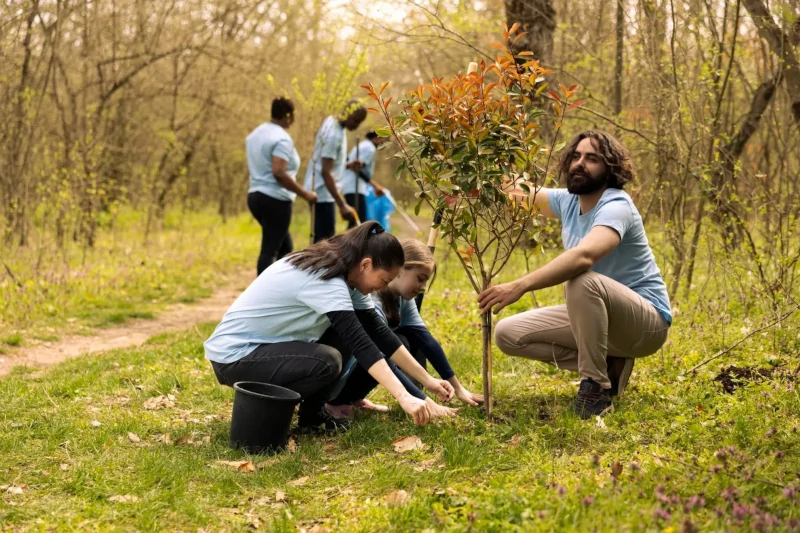
In India’s villages, they catalyze participation in Gram Sabhas, strengthen Panchayats, and turn schemes into tangible outcomes in health, livelihoods, and inclusion.
Why Community Mobilization Matters
India has over 2.62 lakh Panchayats, and effective rural development hinges on informed participation and accountable decision-making at this scale.
Social workers train citizens to use tools like village micro-plans, social audits, and participatory budgeting, ensuring funds translate to services.
- When citizens co-create plans, service delivery improves—seen in year-end reviews emphasizing infrastructure, e-governance, and capacity-building for Panchayats in 2024.
- The Panchayat Advancement Index shows performance diversity: only 0.3% of Gram Panchayats are “Front Runners,” signalling a large canvas for social workers to lift Aspirants through systematic handholding.
Market Landscape: Demand for Rural Governance Skills
Rural governance in India is growing quickly. Today, over 2.6 lakh Gram Panchayats plan and deliver local services, but many still need support.
In 2024, training reached 25.67 lakh participants, a clear sign that skilled people are needed to turn policies into real village results.
With about 61.2% Panchayats rated “Aspirants,” social workers who mobilize Gram Sabhas, explain plans in simple terms, and use basic data dashboards can make the most significant difference.
They help communities participate, track progress, and fix gaps, bridging people, technology, and government so that development is accountable, inclusive, and visible where it matters, the village.
How Social Workers Drive Change
Social workers convene Self-Help Groups, Farmer Producer Organizations, and youth collectives, aligning them with Panchayat plans for livelihoods, health outreach, and climate-resilient assets. They facilitate rights-based entitlements, grievance redress, and convergence across departments, turning schemes into local solutions.
- They enable localized SDGs across nine themes: poverty-free, healthy, water-sufficient, clean and green, and women-friendly Panchayats using structured progress tracking.
- They scaffold leadership among women and marginalized groups, embedding accountability through community scorecards and social audits.
Chanakya University’s Ethos
Chanakya University Bangalore blends Indian civilizational wisdom jñāna (knowledge), ichhā (will), and kriyā (action) with modern scholarship to create transformative leaders for society, business, and government. This purpose-driven vision emphasizes integrity, humanism, creativity, and academic freedom.
- The University’s mission centers on transdisciplinary studies, impactful research, and engagement with society to solve human and environmental challenges.
- Its identity symbolizes ideas with ideals: rooted in heritage, oriented to meaningful action, and committed to service.
MSW at Chanakya: Future-Ready
Chanakya’s Master of Social Work is built on integrating theory with immersive practice—fieldwork, block placements, and collaborative ecosystems with practitioners. Students engage across community development, medical and psychiatric social work, and human resources, gaining breadth and practical depth.
- Distinctive edge: interdisciplinary learning (policy, law, psychology), flexible curriculum, and mentorship from scholar-practitioners.
- Strong foundations in ethical leadership, community immersion, and real-world problem-solving prepare graduates to lead rural governance initiatives.
Practical Details for Aspirants
For clarity on MSW course fees and scholarships, prospective students can review the University’s official program page and recent admissions updates, keeping in mind annual revisions and category-wise components.
The program is typically two years, aligning with the MA course duration standard in India.
- The Master of Social Work syllabus emphasizes field immersion, research, and specializations mapped to India’s development priorities and employer needs.
- MSW course subjects reflect community development, health systems, and organizational practice—matching the hiring landscape in NGOs, CSR, and public programs.
Smart Integration: Learning to Leadership
By pairing community organizing tools with Panchayat data systems, the Chanakya MSW equips graduates to lift Aspirant Panchayats into Performer and Front Runner categories, translating classroom insight into measurable governance improvements. This “ideas to action” approach embodies the University’s jñāna–ichhā–kriyā philosophy.
- Graduates become facilitators of localized SDGs, convergence planning, and social audits, skills the 2024 governance agenda explicitly prioritizes.
- With India scaling rural digital infrastructure, MSW professionals who can analyze Panchayat dashboards and mobilize citizens will shape outcomes where it matters most: the village.
Final Thoughts
When communities organize, governance transforms from paperwork into progress. Social workers make that leap possible, turning Gram Sabha voices into village plans, budgets into assets, and dashboards into everyday accountability.
As India scales training and digitizes Panchayats, the next frontier is talent that blends empathy with evidence. Chanakya University’s Master of Social Work prepares precisely for this moment.
FAQs:
Q1. What is the Master of Social Work course duration?
The MSW program at Chanakya University Bangalore is typically a two-year course.
Q2. What subjects are covered in the MSW program?
The curriculum includes community development, health systems, organizational practice, and interdisciplinary learning in policy, law, and psychology.
Q3. What career opportunities are available after an MSW?
Graduates can work in NGOs, CSR, and public programs, leading initiatives in rural governance and community development.