
 MENU
MENU
About the Centre
In contemporary economics academia, a pervasive bias marginalizes research on certain topics. This hegemony creates significant knowledge and research gaps, sidelining explorations of non-market mechanisms, cultural continuities, and epistemic traditions essential for tackling global challenges like sustainability.
The Centre for Integral Economics exists to bridge these gaps by cultivating rigorous, alternative frameworks that complement existing models, fostering a vertically integrated academic ecosystem—from Research Assistants through PhD scholars to tenured faculty—through dedicated incentives like fellowships and publication rewards, thereby enriching the discipline with pluralistic, context-specific perspectives for holistic economic progress.
Vision
The Centre for Integral Economics at Chanakya University aspires to advance global economic thought by fostering pluralistic, context-specific frameworks that transcend conventional paradigms, uniting scholars worldwide to drive innovative solutions for holistic and sustainable economic progress
Mission

The Centre for Integral Economics at Chanakya University is dedicated to advancing context-specific economic frameworks through innovative research on cultural belief systems, historical continuities, and pedagogical reform, serving as a global hub for scholars to foster holistic and sustainable economic solutions
Research Focus Areas
- Religion and Culture
- History of economic thought
- Sustainable Economics
- Augmenting market-based solutions
- Economics of Institutions
- Political Economy

People
Acting Director
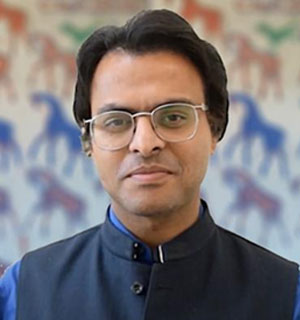
Dr. Yugank Goyal
Associate Professor, IIM Ahmedabad
PhD in Law and Economics from University of Hamburg
Advisory Board
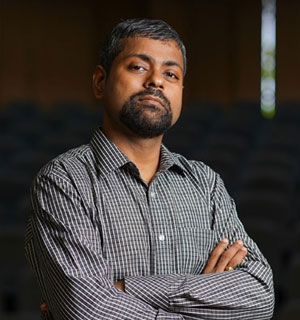
Dr. Kausik Gangopadhyay
Professor, IIM Kozhikode
PhD in Economics from University of Rochester
Advisory Board
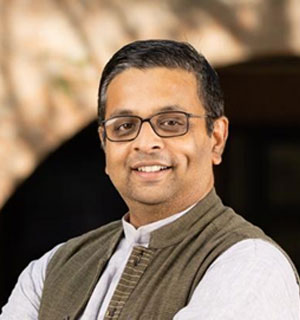
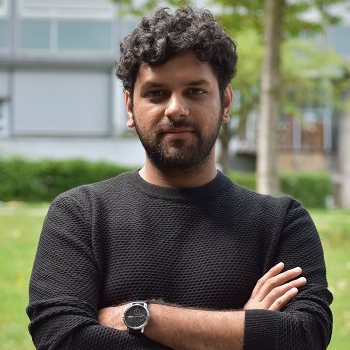
Dr. Ranjan Kumar Ghosh
Associate Professor, IIM Ahmedabad
PhD in Economics from Humboldt University
Advisory Board
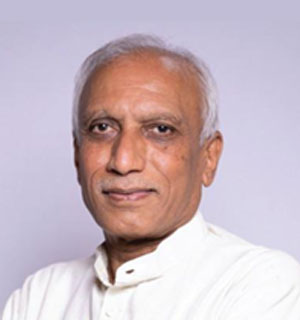
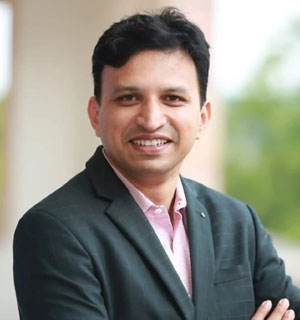
Mr. M. P. Kumar
Entrepreneur. Educationist. Philanthropist.
President, Rashtrotthana Trust
Advisory Board
Dr. Habil Narahari Rao
Former Privatdozent (Adj. Professor), Universität des Saarlandes
PhD in Philosophy from Universität des Saarlandes
Advisory Board
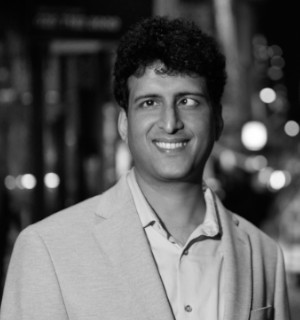
Dr. Aditya V Kuvalekar
Lecturer, University of Essex
PhD in Economics from New York University
Executive Team
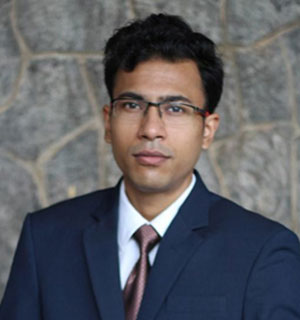
Dr. Swaraj Kumar Dey
Deputy Director
PhD in Economics from IIM Kozhikode
Research areas include political economy, behavioral economics, and game theory
Dr. Shiv Hastawala
PhD in Development Economics
State University of New York at Binghamton
Research areas include development economics and applied microeconomics, and causal inference.
Working Team
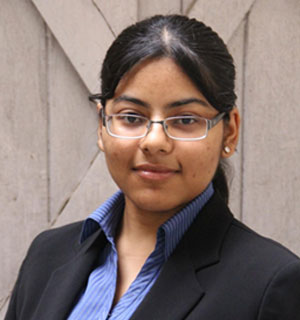
Ms. Charumati Haran
Senior Fellow
Master of Public Policy, Hertie School
Research interests include policy analysis, skill development, technology-driven interventions, public-private partnerships and youth participation in foreign policy.
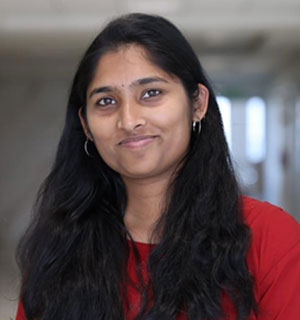
Ms. Greeshma K A
Centre Coordinator
MA Economics, Mangalore University
Research interests include behavioral economics, agricultural production and rural markets, applied microeconomics, and spiritual and ethical economics.
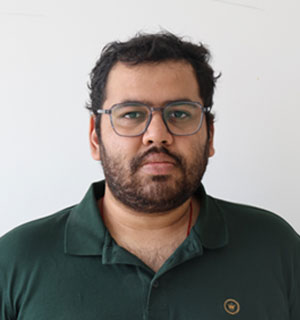
Mr. Vibhor Garg
Research Assistant
MSc (Research) Economic History, London School of Economics
Research interests include economic history, behavioral and developmental economics, machine learning and social data science.
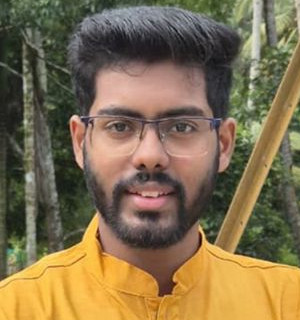
Mr. Ashwin Prakash
Research Assistant
MA Applied Economics, Centre for Development Studies
Research interests include industrial performance, influence of Al in academia, behavioral economics, sustainability, taxation and migration.
Research and Collaborations
Research Papers:
- Identity social media and online political activism : Published in European Journal of Political Economy (ABDC-A)
- Rethinking Economic Pedagogy: Incorporating Indian Epistemology into modern curriculum: Presented in IKSHA 2025: First Annual Academic Conference on Indian Knowledge Systems (IKS), Jawaharlal Nehru University, New Delhi.
- Identity Groups, Susceptibility to Political Fake News and Social Media Choice: Currently under review at the Journal of Comparative Economics (ABDC-A)
Ongoing collaborations
The Consumption Behaviour Project conducts a comparative study of animistic and non-animistic cultures to understand how belief systems shape sustainable consumption habits in collaboration with Prestige University and IIM Kozhikode


The Gurukul Project seeks to build a near-census, deep data set of existing Gurukuls in India to explore a wide range of questions around Gurukuls
The India Evidence Project looks to create an exhaustive dataset of metadata on causal evidence papers that touch upon different aspects of the Indian civilization-state.
The Good Life Project examines economic and non-economic factors that make up a good life, in partnership with Azim Premji University.

The Dharmasthala project is under development with the Centre for Analytical Finance, ISB.

Activities
Over the year, the Centre plans to launch diverse projects such as research residencies, fellowships for academic writing, doctoral scholarships, and support for publications in top-tier journals. In-house initiatives such as textbook development, bibliometric studies, and institutional surveys are also under development.
The Center also envisions hosting workshops on integral economics, annual academic conferences, and industry-government policy conclaves, while leveraging digital platforms and scholarly networks to broaden access to knowledge and foster engagement beyond academia. In the long term, the Center for Integral Economics is committed to cultivating a globally connected, interdisciplinary ecosystem of researchers, educators, and practitioners.
Events
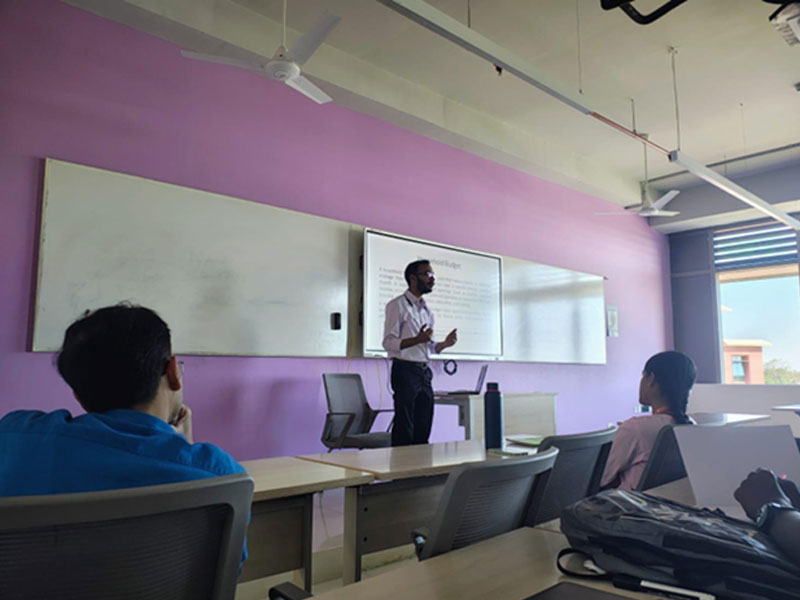
Discussion on the Union Budget 2024-25
On February 7 2025, the Centre for Integral Economics at Chanakya University hosted an engaging and analytically rich discussion on the Union Budget 2024–25, bringing together students, faculty, and scholars for a focused conversation on the budget’s priorities, fiscal strategy, and broader socio-economic implications. The session aimed to move beyond surface-level commentary, encouraging participants to view the budget as a reflection of deeper economic and policy directions. Guest speakers Dr. Swaraj Kumar Dey and Dr. Renjith Raj offered complementary insights Dr. Raj presented a structured overview of sectoral allocations and taxation proposals, while Dr. Dey analyzed the broader economic and social impact of the budget on key stakeholder groups including rural communities, the middle class, and business sectors. The discussion was marked by thoughtful engagement from the audience, with questions addressing themes such as fiscal sustainability, welfare provisions, and inclusive growth. This event reflected the Centre’s commitment to fostering critical, context-sensitive economic discourse and creating meaningful platforms for dialogue on contemporary policy issues.
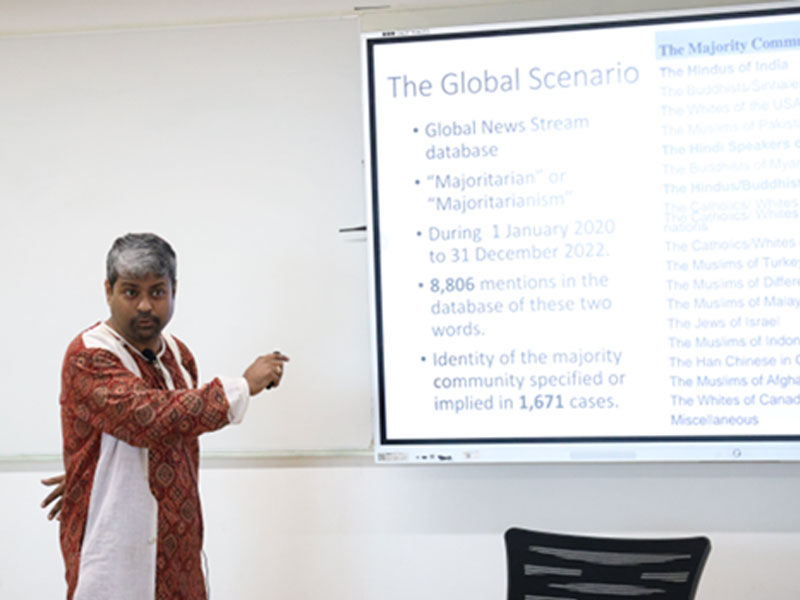
Book Launch: The Majoritarian Myth
On 13th June 2025, The Centre for Integral Economics, in collaboration with the Research Exchange Forum (REF), hosted a thought-provoking discussion on The Majoritarian Myth by Prof. Kaushik Gangopadhyay. The event featured opening remarks by Dr. Priyanka Dwivedi and an introductory note by Dr. Swaraj Kumar Dey, setting the tone for a rich academic exchange. The book challenges the common assumption that majority communities are inherently oppressive, arguing instead that intolerance stems from rigid ideological frameworks—what the author terms Linear Theories of Social Evolution (LTSE)—embedded in ideologies like Marxism, Political Islam, and Cultural Liberalism. Prof. Gangopadhyay’s presentation, followed by an engaging Q&A with students and faculty, emphasized that real intolerance is driven by ideological dogma rather than numerical dominance. Drawing on Indic civilizational values such as Satya (truth) and Ahimsa (non-violence), the session called for a return to empirically grounded, tradition-informed social discourse.
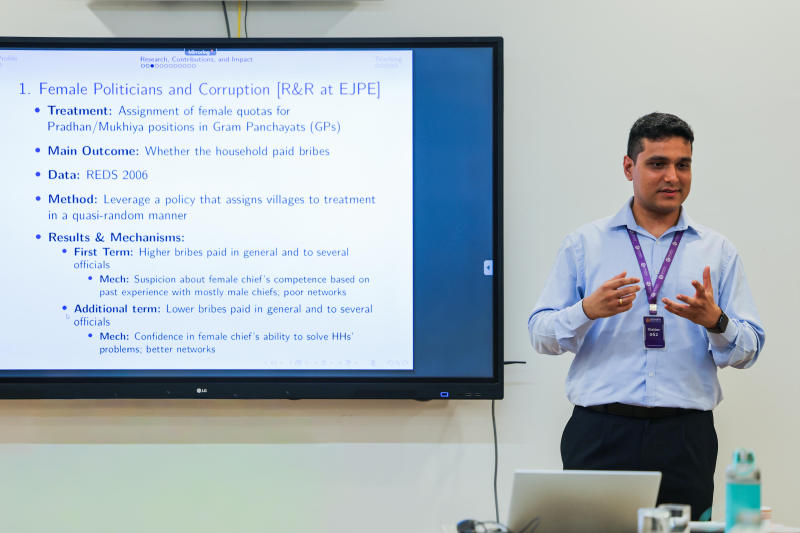
Research Exchange Forum: Advancing Development Economics
On September 12th, 2025, the Centre for Integral Economics and Research Exchange Forum hosted Dr. Shiv Hastawala. Dr. Hastawala presented an overview of his research on development economics and causal inference methods. This interactive session focused on four key elements: First, Dr. Hastawala’s study on female politicians and corruption in Indian Gram Panchayats, which found that women leaders initially received more bribes when appointed through quotas, but this decreased over subsequent terms as confidence grew. Second, his research on electricity access in West Bengal showed that electrification improved test scores for younger children, with diminishing effects for older students. Third, Dr. Shiv discussed his upcoming projects and how the research questions would be refined and explored over time. Finally, the session closed with a useful discussion of teaching methods in economics and how they could be made more engaging for students.
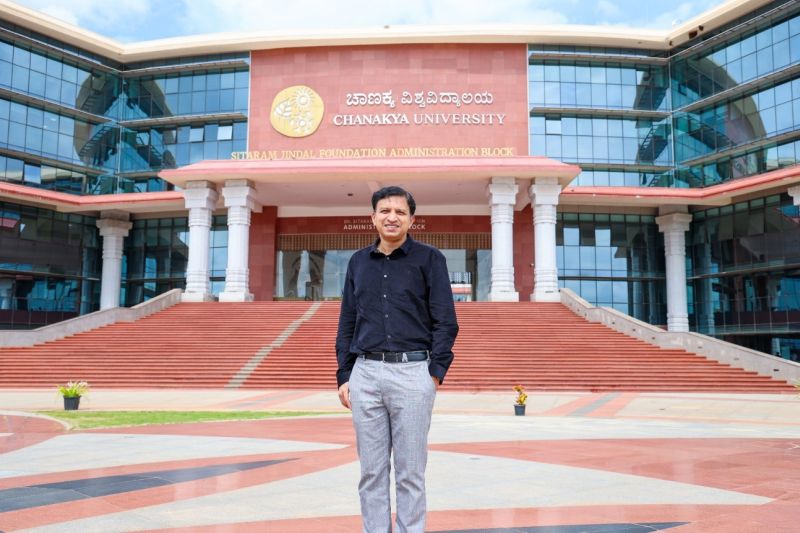
Meeting with Prof. Prasanna Tantri: Economic Research in India
On October 24th, 2025, the Centre for Integral Economics hosted Professor Prasanna Tantri, Associate Professor of Finance and the Executive Director of the Centre for Analytical Finance at the Indian School of Business (ISB). The meeting began by discussing the current state of economics research in India, and potential avenues for growth within the research focus areas of the Centre. The discussion expanded into the broader need for thought leadership in the field, how feasibility analyses can improve studies and specific data gaps that make research into some research areas especially challenging e.g. SHGs and informal lending markets that drive economic life in many parts of India are not well documented. While developing such datasets for public use requires cultivating new inter-institutional partnerships, it carries great potential to support more rigorous, evidence-driven policy in the future.
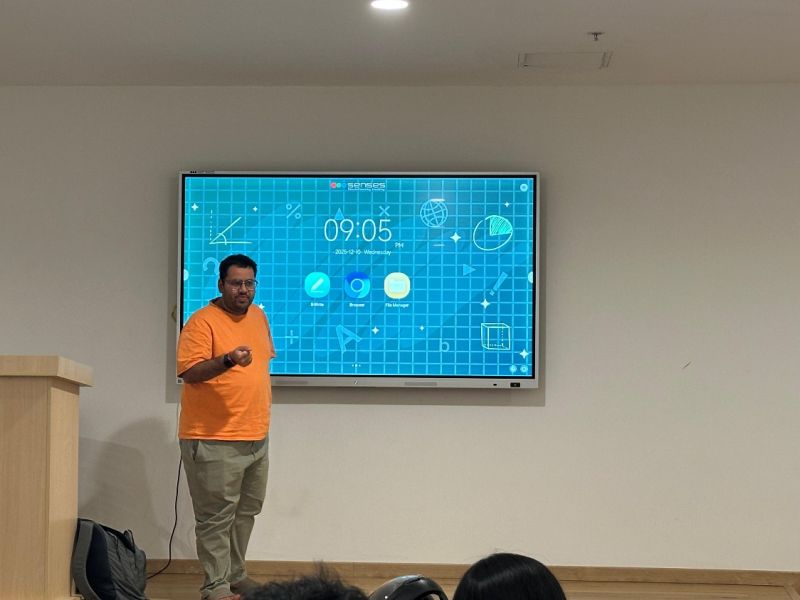
Nobel Prize Watch Party and Discussion
On December 10th, 2025, the Centre for Integral Economics and the Chanakya Fellowship in Social Sciences organized an event where students, staff, and faculty could watch the Nobel Prize lectures given by the 2025 Economics Laureates: Dr. Joel Mokyr, Dr. Peter Howitt and Dr. Phillippe Aghion. The discussion thereafter was led by Vibhor Garg, a researcher of economic history. Vibhor discussed the intellectual tradition the laureates were part of – starting with Robert Solow, built upon by Paul Romer, Charles Jones, and Jean Tirole, and brought into a larger global economic narrative by Daron Acemoglu, James Robinson, and Simon Johnson. This was followed by a question-and-answer about the relevance and value of the insights the laureates have developed, vis-a-vis their relevance to growth and development in India. The audience discussed institutions and their role in fostering and retaining high-skilled talent in India, what conditions encourage the migration of talent, and which factors India needs to consider to match China and the United States as leaders in innovation.
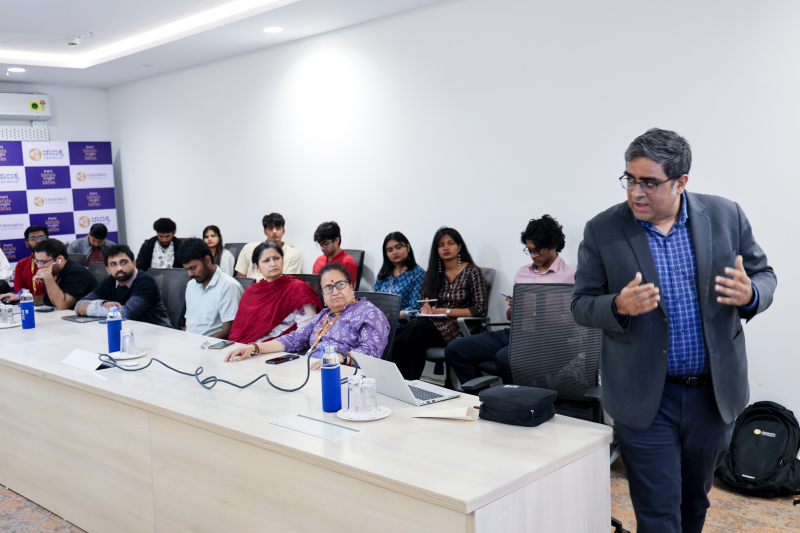
Paper Presentation: A cross-country study of policy impact
On January 8th, 2026, the Centre for Integral Economics and Research Exchange Forum hosted Professor Shubho Roy, Assistant Professor at Shiv Nadar University, Chennai, and visiting faculty at the Chanakya Fellowship in Social Sciences. Prof. Roy presented his paper on the topic “Missing Women through Land Reform”. The paper explored the reasons for male preference and sex selection at birth in countries which implemented “land-to-the-tiller reforms” (A type of reform where the government distributes agricultural land to farmers, but places legal restrictions on transferring, using, or leasing the land). The paper argued that these reforms create different social and economic pressures to beget sons to maintain possession of land within families. Cross-country data from China, Korea, Russia, Hong Kong, Taiwan, Cuba, India etc. showed evidence for this hypothesis: that there was a temporal link between implementation of these reforms and decline in sex-at-birth ratio, while the degree of land reform influenced the magnitude of the decline. The presentation was followed by a question-and-answer session with faculty and students from various social sciences courses: The discussion centred on the potential for complementary approaches from other disciplines, and the challenges of extending this type of study to different Indian states, and potential counterfactuals and strategies for India.
Contact Us

To get in touch with us, please reach out to
Greeshma KA, Centre Coordinator at
greeshma.ka@chanakyauniversity.edu.in