
Economists must think beyond GDP and consider questions like how wealth is distributed, whether people live with dignity, and whether development is sustainable.
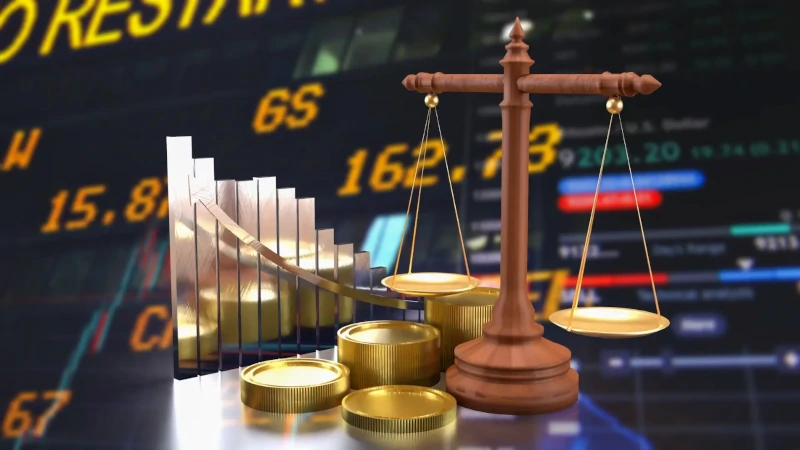
To address this, we will explore ‘economics for social justice‘ today, examining factors such as equity, inclusion, and human well-being. Let’s begin with an insightful quote from Joseph Stiglitz: “What we measure affects what we do.”
We also recommend exploring Chanakya University Bangalore, which offers an industry-ready Bachelor of Economics syllabus supported by industry tie-ups, international collaborations, networking opportunities, an inclusive & vibrant campus life, and numerous other exclusive benefits.
Why Economists Must Look Beyond Gross Domestic Product?
India’s real GDP at 7.8% in the second quarter of the fiscal year 2025-26 (Q2 FY26) is among the best-performing economies worldwide. However, India’s top 10% of the population owns approximately 65% to 77% of the country’s wealth.
We still have around 5% of the population falling into the extreme poverty category, rising unemployment, and high medical inflation affecting millions of Indians.
India’s extreme poverty rate fell sharply from 27.1% in 2011-12 to 5.3% in 2022-23, based on the World Bank’s new $3/day threshold. This remarkable decline shows how effective economic policies and welfare programs have lifted millions out of extreme poverty.
Therefore, although India’s GDP has grown significantly in recent decades, challenges like unemployment, poverty, and unequal access to healthcare and education remain. We need professionals with a BA in Economics or a Master’s in Economics to think beyond GDP and consider social indicators in policy making. Some of the contemporary examples;
- Norway, Denmark, and other Nordic countries consistently rank high on human development indexes because of their focus on welfare, healthcare, and education, along with vital economic indicators.
- UPI (over 640 million transactions a day) and Aadhar (Over 140 crore Aadhar card holders) are excellent examples of how economic tools can transform socio-economic parameters across India.
- The United Nations’ Human Development Index (HDI), which considers life expectancy, education, and income, reflects a more holistic picture of progress.
Thus, economics for social justice involves tools to reduce socio-economic disparity, income inequality, design welfare policies, address climate change, sustainability challenges and areas that are not covered in GDP.
The BA Economics Honours syllabus at Chanakya University provides a holistic course covering traditional and emerging concepts of economics to prepare professionals for tomorrow.
Economics for Social Justice at Chanakya University, Bangalore
Universities like Chanakya University Bangalore are reshaping how economics is taught to prepare students for these realities. BA or MA course durations no longer focus only on theories of supply and demand but also include issues like poverty alleviation, inequality, and environmental sustainability.
MA Course Duration: 2 Year full-time course (4 semesters)
MA Course Fees: Rs. 2,05,000/-
Contemporary Examples of Economics for Social Justice
Economics for social justice is not just an academic exercise; it has practical short and long-term implications. Consider these examples:
- Minimum Wage Policies
- Social Security Schemes in India, like Ayushman Bharat (healthcare) or PM-KISAN (support for farmers)
- Policies promoting a green economy, renewable energy and carbon taxation are examples of justice-driven economics.
Students trained in economics at purpose-driven universities like Chanakya University become change-makers in society. Explore now.
Conclusion
As the world faces growing inequality, climate crises, and shifting global dynamics, it is clear that GDP alone cannot define progress. Economics for social justice offers a broader lens to understand human development. For students, whether they are exploring the BA Economics syllabus, understanding the BA Economics scope, or planning MA courses, the opportunity lies in learning how economic tools can create a just and inclusive society.
Chanakya University Bangalore plays a role in shaping this perspective, preparing graduates who can think critically and work toward equitable solutions. The future of economics lies not just in counting what we produce, but in valuing how we live.
Frequently Asked Questions
Why is GDP not enough to measure progress?
GDP measures output but ignores inequality, environment, and well-being.
What is the BA Economics scope for students?
It includes careers in policy, research, banking, NGOs, and social enterprises.
How does the BA Economics honours syllabus differ?
It covers advanced topics like econometrics, development studies, and public policy.
What is the usual MA course duration?
Most MA Economics programs last 2 years, split into 4 semesters.
How much are MA course fees in India?
They vary by university; some offer scholarships for deserving students. In Chanakya University Bangalore, the fee for a 2-year full-time MA course in Economics is Rs. 2,05,000/- per year.
Reference Link