
Did you know ‘Reduce Hunger’ is in second position in the 17 UN Sustainable Development Goals? The world leaders adopted these goals during the UN Summit in New York in 2015, aiming to achieve them by 2030.
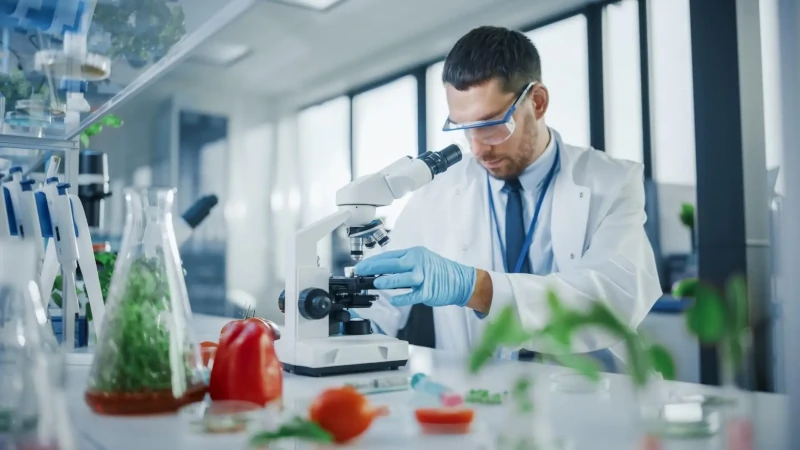
However, the world hunger facts are not particularly impressive as of 2025, and a BSc in Biotechnology could hold the secret formula to solve this national and global challenge. We will explore how lab grown food can be the answer in the following sections.
World Hunger Stats 2025
- Around 8.2% of the global population (about 673 million people) suffered from chronic undernourishment in 2024.
- Approximately 2.3 billion people experienced severe or moderate food insecurity in 2024.
- Africa is the worst affected by food insecurity, where 1 out of 5 people goes hungry.
(Source: Concern Worldwide)
Crores of people are still going hungry every day. Food insecurity is rising due to climate change, population growth, land degradation, and adverse impacts on crop patterns and food production. The solution is lab-grown food powered by biotechnology and bioengineering principles.
We recommend Chanakya University’s B Tech in Biotechnology and Bioengineering to develop a thorough understanding of these subjects and to create solutions to the global hunger problem.
What is Lab-Grown Food?
Lab-grown or cultured food is produced by cultivating cells in controlled environments rather than raising animals or growing crops traditionally. For example, cultured meat starts with a small sample of animal cells, which are then grown in a nutrient-rich medium until they form muscle tissue, just like in a real animal.
This process uses bioreactors, similar to those found in biopharmaceutical labs, and requires expertise in cell biology, bioprocessing, and bioengineering. These are integral parts of a BSc Biotechnology course details.
Why It Matters: Solving the Food Crisis
The world’s population is expected to exceed 9.7 billion by 2050, and traditional agriculture may not be able to meet this demand sustainably. Lab-grown food can help address global hunger by:
Reducing Land and Water Use: lab-grown food requires up to 95% less land and 75% less water than conventional farming.
Lowering Greenhouse Gas Emissions: Studies suggest lab-grown meat could cut emissions by 78%, contributing to climate action goals.
Ensuring Food Security: Production can occur anywhere, even in regions with poor soil or extreme weather.
Preventing Animal Cruelty: Since no animals are slaughtered, it offers an ethical alternative to meat consumption.
Countries like Singapore and the United States have already approved lab-grown meat for public sale, while Indian researchers and startups are exploring cell-based protein and plant bioprinting technologies.
Limitations and Considerations about Lab-Grown Food
- High costs
- Significant energy demands
- Scalability challenges
- Difficulties in replicating the exact structure and texture of traditional food and meat
- Potential contamination and nutrient deficiencies
- Cells in the lab lack natural immune systems
- A sterile production environment to prevent infections
How Chanakya University is Building Skills for Tomorrow with B Tech Biotechnology and Bioengineering?
BSc Biotechnology Course Details: A 3-year degree focusing on genetics, microbiology, biochemistry, bioinformatics, and bioprocess engineering.
BSc Biotechnology Subjects: Cell biology, molecular biology, immunology, environmental biotechnology, and food science.
BSc Biotechnology Syllabus: It combines core theoretical subjects with lab training, research projects, and interdisciplinary electives.
BSc Biotechnology Scope: Graduates can work in food technology, pharmaceuticals, agriculture, or sustainable biotech startups, or continue higher studies in biotechnology and bioengineering.
Conclusion: Bioscience as the New Farmer
Could lab-grown food end world hunger? Perhaps not overnight, but it can certainly transform how we produce and distribute food. By merging innovation, sustainability, and compassion, biotechnology holds the key to a hunger-free world.
Future scientists trained in BSc Biotechnology at Chanakya University, Bangalore, will be the driving force behind this transformation, designing sustainable food systems that nourish both people and the planet.
Frequently Asked Questions
Is lab-grown food safe to eat?
Yes. Lab-grown food is produced under sterile, regulated lab conditions and undergoes strict safety checks before being approved for public consumption.
How can biotechnology students work in this field?
Students pursuing BTech Biotechnology or BSc Biotechnology can specialise in cell culture, bioprocess engineering, or food biotechnology. These are directly linked to the development of lab-grown food.
What is the career scope after studying biotechnology at Chanakya University?
Graduates can work in food tech companies, R&D labs, biotech startups, or sustainability projects, contributing to innovations that may one day end world hunger.
Reference List