A Strategic Reset: Ambassador Ashok K. Kantha Delivers Insightful Lecture on ‘Towards Neighbourhood First 2.0’ and Launches Edited Volume, “Reconstructing India’s Worldview: A Strategic Realignment”
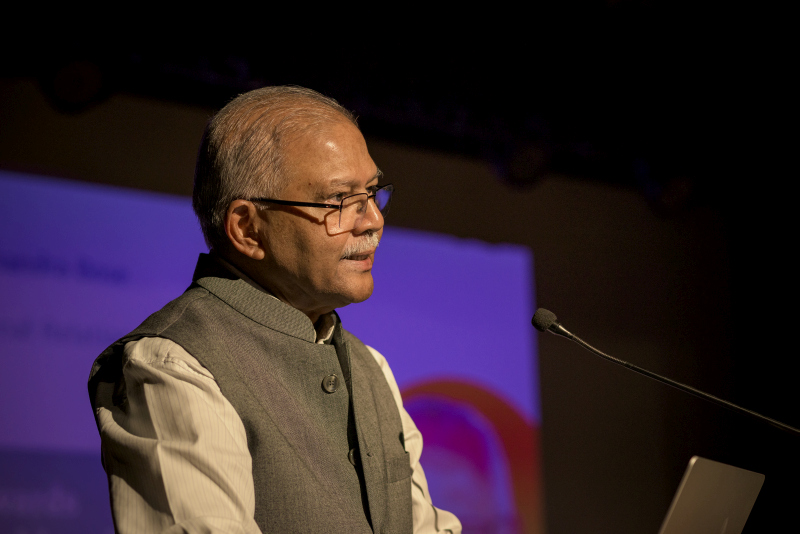
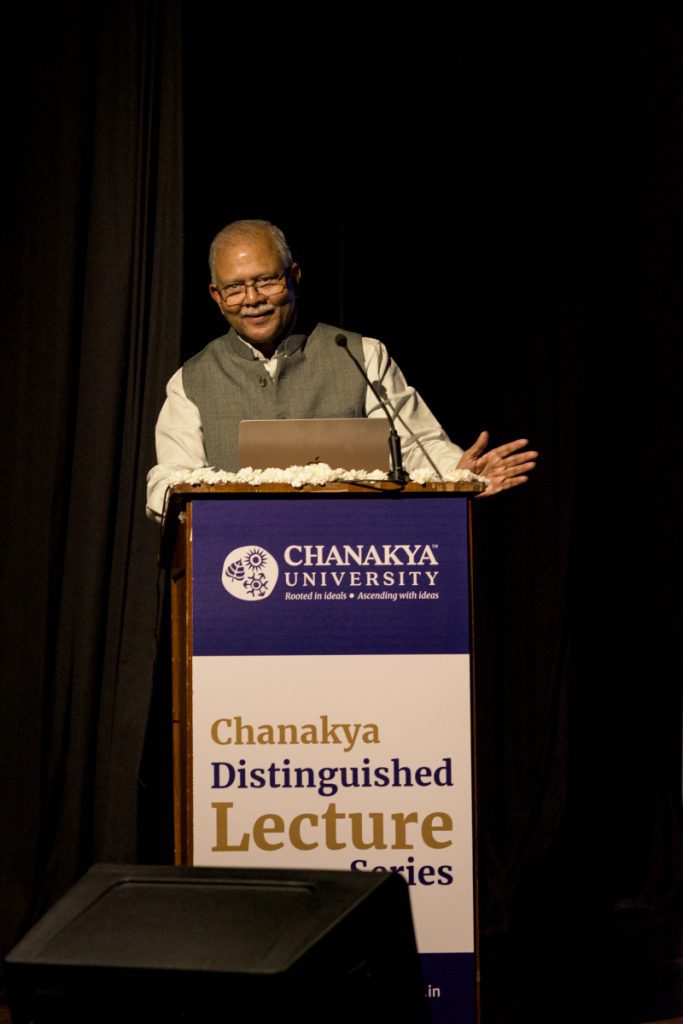
Subhash Chandra Bose Chair in International Relations, hosted the latest thought-provoking edition of the Distinguished Lecture Series (DLS), featuring Sri Ashok K. Kantha, (Former Ambassador of India to China). Addressing faculty members, students, and distinguished guests at the Indian Institute of World Culture, Bengaluru, Amb. Kantha delivered an engaging and insightful exploration of India’s evolving foreign policy and the dynamics shaping its regional engagement.
The gathering was framed by two significant milestones. Firstly, the event served as a sincere tribute to the late Ambassador P.S. Raghavan, whom the speaker described as a respected friend and accomplished diplomat whose wisdom seemed boundless. He had previously held the position of Chairperson of the Advisory Council of the Subhas Chandra Bose Chair in International Relations. Secondly, the occasion marked Amb. Kantha’s formal entry as the inaugural chair professor of the SCB Chair on International Relations at the University, a role rooted in the vision of a strategically autonomous and globally engaged India.
Amb. Kantha, whose diplomatic career spanned over 38 years with a specialization in India’s neighbourhood and extended neighbourhood, presented a “hard-headed, operationally oriented argument for a reset” of India’s regional strategy. He clarified that the aim was not a pan to past achievements, but a candidate diagnosis of where the original Neighbourhood First 1.0 policy succeeded and where it came short in confronting the geopolitical realities of our time, including the rise of China.
Crucially, the Ambassador dismissed the popular notion that India can transcend its neighbourhood on its journey towards Viksit Bharat 2047, asserting instead that the periphery is not a “detachable appendage” but the “very keel of his strategic vessel”.
The lecture focused on ten interlinked propositions designed to guide India’s conduct. The most vital proposition for Neighbourhood First 2.0 is making economic partnership the strategic centerpiece, shifting the policy emphasis from assistance towards creating a common economic space. Amb. Kantha argued that India, as the fastest-growing large economy, can offer non-reciprocal arrangements to integrate neighbours into its growth story, thereby increasing the “cost of antagonism”. This reset requires prioritizing resilient connectivity, including digital, rail, road, and power grid links, which must be designed with political risk mitigation and local ownership.
Other key suggestions included institutionalizing India’s proven capacity as a “first responder” during crises, but always respecting sovereignty, and strategically tackling bilateral irritants such as the fishery issue with Sri Lanka through technical, enforceable solutions. Regarding the China challenge, which views South Asia as its strategic periphery, the strategy must be predicated on leveraging India’s own strengths and synergies to persuade neighbours not to ignore India’s core security interests. Amb. Kantha emphasized the need for India to act as a “partner and not a patron,” demonstrating political courage, institutional reform, and operational competence in its execution.
The event concluded with a question-and-answer session and the unveiling of the edited volume, Reconstructing India’s Worldview: A Strategic Realignment, edited by Dr Chetan Singai and Gargi Shanbhag which originated from a roundtable ‘India’s Engagement with the World’ in June 2024. The successful lecture reaffirmed the commitment of Chanakya University and the Subhas Chandra Bose Chair to advancing scholarship in international relations.