
Published Date: July 2, 2026
In the last 30 years, China has successfully executed one of the world’s most ambitious reform efforts in its higher education. The educational institutions that were not popular among the international rankings are now recognised as some of the world’s leading research and innovation centres. This change has not happened overnight. Beijing viewed higher education as an important investment in technological self-reliance, industrial competitiveness, and national power. By providing sustained support, promoting institutional reform, attracting talent and fostering close ties between the university, industry and the state, higher education has become a cornerstone of China’s innovation-driven development strategy.
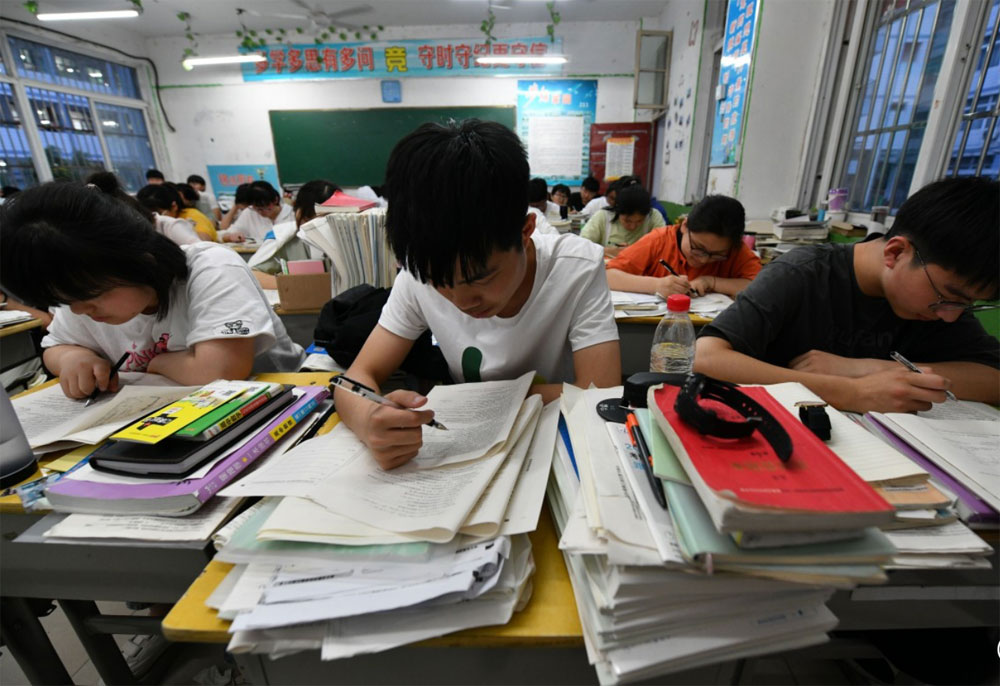
After Deng Xiaoping’s economic reforms, the Chinese government realised that the country’s long-term growth could not rely on cheap manufacturing indefinitely. Creating competitiveness required scientific knowledge, trained scientists, and technological innovations from universities.
The first such initiative was Project 211 in 1995, which heavily funded research facilities, post-graduate education, faculty training and lab equipment across some 100 universities. Later on, Project 985 (1998) was initiated with the aim of positioning a few of those universities for a global reputation. These programmes, combined, have turned universities like Tsinghua, Peking, Fudan, Zhejiang and Shanghai Jiao Tong into world-class research institutions. The Thousand Talents Plan (2008) further paved the way for this effort by offering top scientists and foreign Chinese researchers high salaries, research funds, and advanced research facilities in China. These programmes coincided with the dramatic turnaround in the Chinese brain drain. In recent years, the number of Chinese students studying overseas has risen to more than 80 per cent, a significant increase in return rates that has bolstered China’s research environment. In 2017, the Double First-Class Initiative went beyond creating elite universities by focusing on the development of globally competitive disciplines through ongoing assessment and investment.
The scale of expansion in China’s higher education has been unprecedented. The Gross Enrolment Ratio rose from less than 10 per cent in the late 1990s to more than 60 per cent in recent years today, and the number of students enrolled in universities has also increased, from less than 8 million in 1998 to more than 45 million today. In the same period, China doubled its investment in research and development to around 2.8 per cent of GDP, or more than 3.92 trillion yuan (around $568 billion), placing it among the world’s largest R&D investors. These investments have helped build the foundation for a dramatic increase in scientific capacity.
The impact is evident in measurable outcomes. Today, China generates approximately one-fourth of the scientific publications in the world; according to the major indexing databases, the number of scientific publications produced every year is higher than the number of publications produced by the United States. The 2026 Nature Index, which measures the quality of the world’s top research institutions, provides a clear indication of how fast China has moved to the forefront of producing high-quality science. The World Intellectual Property Organisation (WIPO) reports that China has continued to be the world’s top patent applicant for the past few years, with approximately 50 per cent of the world’s patent applications being filed by China.
Most importantly, a number of universities in China have turned into specialised research institutes for some key strategic industries.
Tsinghua University has emerged as a global research center of excellence in the fields of artificial intelligence, semiconductor engineering and advanced manufacturing, and has provided researchers and engineers for companies like Huawei, Alibaba, Tencent, and ByteDance. Today, China accounts for about one-third of AI research publications in the world, highlighting the close link between university research and technological innovation.
The University of Science and Technology of China (USTC) stands as one of the leading research institutes globally in the field of quantum technology. It has led to the development of the world’s first quantum communication satellite, Micius, and continues to make advances in quantum communication and quantum computing, bringing China to the forefront of the strategically important field.
Central South University, the University of Science and Technology Beijing, and the China University of Mining and Technology are strong new bases of rare-earth metallurgy, mineral processing, and advanced magnetic materials. Their work has helped propel China to a dominant position in the midstream rare-earth value chain. Today, China performs nearly 91 per cent of the world’s rare-earth separation and refining, and it is responsible for making nearly 94 per cent of the world’s sintered permanent magnets, which are used in electric vehicles, wind turbines, robotics and defence technologies.
China’s noteworthy rise to becoming the world’s biggest maker of electric vehicles is also a testament to decades of investment in university research. Tsinghua University has a strong reputation globally in the fields of automotive engineering, battery systems, and intelligent mobility. Beijing Institute of Technology has been at the forefront of the development of electric vehicles and energy storage technologies, while Xi’an Jiaotong University has contributed significantly to the field of power electronics and battery engineering. Harbin Institute of Technology has been actively engaged in the research of lightweight materials and advanced manufacturing technologies. These universities have worked closely with BYD and CATL in the field of lithium-ion batteries, battery management systems, and electric mobility. Their work has successfully been commercialised into innovations, which have enabled China to become the producer of over 70 per cent of the world’s electric vehicles (EVs) and dominate the production of over 75 per cent of the world’s lithium-ion battery production capacity. This is a unique characteristic of the Chinese higher education system, in which universities, research laboratories and industry have a tightly knit innovation ecosystem. Their impact and success extend beyond publications and global rankings to patents, technology transfer, human talent, and their impact on strategic industries.
The experience of China indicates that universities are not only educational institutions but are also strategic infrastructure. As ports, highways and power grids powered China’s manufacturing boom, so do these universities underpin the nation’s dominance in areas of artificial intelligence, quantum technologies, rare-earth processing, advanced batteries and new industries. China’s climb up the academic ladder is greater than just a social policy – indeed it is a policy of industry and innovation, and, more than ever, a policy of geopolitics in the twenty-first century.
Om Ranjan is a Doctoral Scholar in International Relations and Security Studies at Rashtriya Raksha University, Gandhinagar.