
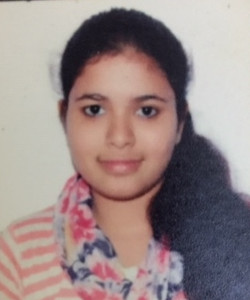
Anjali Pandey
MTech Biotechnology Engineering, 2022, Banasthali Vidyapith, Rajasthan, B.Tech. Biotechnology Engineering 2020, Banasthali Vidyapith, RajasthanPh.D. Scholar, School of Biosciences
Anjali Pandey
MTech Biotechnology Engineering, 2022, Banasthali Vidyapith, Rajasthan, B.Tech. Biotechnology Engineering 2020, Banasthali Vidyapith, RajasthanCurrently, I’m working on cancer biology research. My research question is to overcome the limitations of conventional treatment therapies for treating cancer. The conventional methods of treatment have some limitations, such as drug resistance, serious adverse reactions, low survival benefits, expensive, painful. There are some advanced treatment modalities such as hyperthermia/ablation, immunotherapy, targeted drug therapy, cryoablation, but these also have drawbacks as it depends on the thermal conductivity (0.5 S/m) which uses heat to kill cancerous cells but it depends on the size of the tumor tissue, heat-sink (i.e. The heat sink effect occurs when a large blood vessel is close to the target lesion being treated. The blood flow causes a cooling effect, which can prevent the target area from reaching cytotoxic temperatures and effectively removing cancer) that can reduce the effectiveness of cancer treatments like radiofrequency ablation (RFA) and microwave ablation (MWA). Also, these therapies are invasive and leaves scar. Immunotherapy is confined to liquid cancer (i.e. blood cancer). Targeted drug therapy leads to multidrug resistance (MDR). Radiotherapy can be difficult to administer to the acidic and hypoxic areas of tumors. These therapies decrease the efficiency and recovery rate.
Magnetic nano-based therapy should be utilized for cancer treatment. Magnetic hyperthermia (MHT) is a non-invasive cancer treatment that uses heat to kill cancer cells. Magnetic materials are delivered to the tumor, and an alternating magnetic field (AMF) is applied to generate heat. MHT is effective against deep-seated tumors and is minimally toxic to healthy cells. The approach is to treat liver cancer by mild MHT using specially designed composite magnetic nanoparticles. The controllable mild MHT will show almost complete inhibition of liver cancer cell proliferation and tumor growth.
Anjali Pandey is a dedicated researcher with a strong foundation in molecular biology and biomedical sciences. From 2022 to 2024, she served as a Research Scientist at Peptomer Therapeutics, where she gained extensive experience in applied research and development. Currently, she is pursuing her doctoral studies at Chanakya University-School of Biosciences (since 2025), focusing on advancing innovative solutions in the life sciences domain.
Anjali has a diverse research background that spans preclinical research, antimicrobial resistance (AMR) studies, and mammalian cell culture, with hands-on expertise in animal handling and in vivo experimentation. Her dissertation work at DRDO’s Institute of Nuclear Medicine & Allied Sciences (INMAS), New Delhi, involved contributing to preclinical investigations, further strengthening her skills in translational biomedical research. Anjali brings together academic rigor and practical research expertise, making her an emerging scholar in molecular biology and biotechnology.
- M.Tech., Biotechnology Engineering, 2022, Banasthali Vidyapith, Rajasthan
- B.Tech., Biotechnology Engineering, 2020, Banasthali Vidyapith, Rajasthan
Project 1:
- Title: peptide synthesis and AMR validation
- Duration: 2years
- Granting Agency: NIDHI, NAAVIC.
- PIs/Co PIs: Dr. Kantaraja Chindera, Dr. Manohar Mahatto
- Purpose: To develop a lead molecule for therapeutic and healthcare.
- Short Description: Synthesizing the peptide and oligomers and validating through the biochemical techniques.
- Status: preclinical stage.
Project 2:
- Title: Magnetic nanoparticle-based therapy for treating cancer.
- Duration: ongoing
- PIs/Co PIs: Dr. Shilpee Jain
- Purpose: To develop a nanotherapeutic-based therapy to treat cancer.
- Short Description: Synthesizing the nanoparticle and validating via invitro and in vivo studies.
- Status: ongoing research
- 2016-2018: Two-year NSS candidate.
- 2018: 15-day molecular biology training certificate from Helix Biogenesis, Noida.
- 2018: Diploma in medical image processing.
- 2018: Diploma in SAROD (musical instrument).
- 2020: Six-month Dissertation certificate from DRDO INMAS, New Delhi.
- 2022: One-year Dissertation certificate from DRDO INMAS, New Delhi.
- 2024: Two years of professional experience from Peptomer Therapeutics, Haryana.