
By Saurabh Kaushik
Published Date: August 28, 2026
Three important things happened over the past couple of months. One, on June 14, the Nepal Electricity Authority confirmed the agreement to export 40 MW electricity to Bangladesh via India in a tripartite arrangement, from midnight of June 15. This operationalizes the landmark Tripartite Power Sales Agreement signed on October 3, 2024, between Nepal, India and Bangladesh. Two, marking a significant increase in the amount of traded electricity, the 13th India-Nepal Joint Steering Committee and Joint Working Group meeting in Pokhara on July 14–15, 2026, agreed to increase Nepal’s electricity export capacity to 1,650 MW from 1,100 MW, and imports from India to 1,400 MW from 1,000 MW. Three, seeking to boost bilateral cooperation in the hydropower sector and cross-border electricity trade, representatives of Independent Power Producers’ Association of Nepal (IPPAN) met the Indian Ambassador Naveen Srivastava on 21 July.
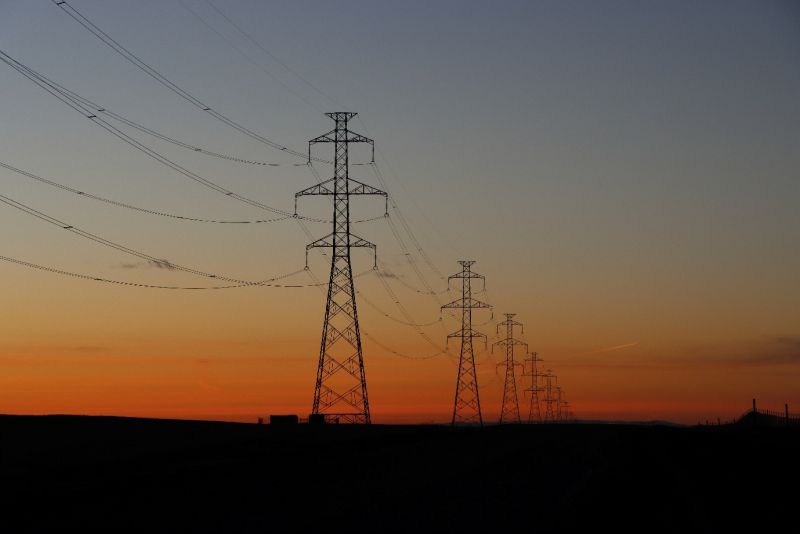
Recent developments signal a concerted policy push on the part of both the countries and highlight a growing trend towards subregional energy integration in South Asia. For instance, electricity generated from two hydropower projects in Nepal is now being sold to Bangladesh for 6.40 US cents per kWh, thereby facilitating trilateral electricity trade. The electricity is supplied through the Dhalkebar-Muzzafarpur 400 kV line and further carried into Bangladesh from West Bengal through the Baharampur–Bheramara 400kV line. This tripartite electricity arrangement will generate more annual earnings for Nepal. Nepal earned NPR 29.32 billion through electricity exports in the fiscal year 2025/26.
Signals of a clear growth trajectory
The revenue generated for fiscal year 2025/26 standalone represents a record – it is the highest ever annual income generated by the country in electricity exports to date. Notably, Nepal earned NPR 17.45 billion last year through the sale of electricity, marking an increase in export earnings by a remarkable 67.96 percent on a year-on-year basis. The volume of exports, too, increased by 62.89 percent from 2.3829 billion units exported in FY 2024/25 to 3.8774 billion units (kWh) in FY 2025/26. Similarly, compared to previous fiscal year, the volume of imported electricity fell by 31.57 percent to 1.1498 billion units. Cumulatively, this has resulted in a net trade surplus of NPR 18.76 billion from cross-border electricity trade in FY 2025/26 – a fourfold increase as compared to NPR 4.53 billion accrued in FY 2024/25.
There are three interrelated reasons for this drastic change. The first one is related to creating a conducive policy and regulatory environment. On 4 January 2024, the seventh meeting of the Nepal-India Joint Commission formalised a 10,000 MW long term power purchase agreement between India and Nepal, with India absorbing hydroelectricity exports from Nepal over the long term. Second, on the same day the agreement came into effect, three 132 kV cross-border power transmission lines, Kataiya-Kusaha, Raxaul-Parwanipur, and New Nautanwa-Mainhiya, connecting India and Nepal were inaugurated, operationalising the new joint policy architecture. This boosted the technical-infrastructural linkage between the two countries and added about 200 MW capacity to the cross-border electricity trade apparatus. Third, surplus hydroelectricity generated in Nepal, began getting absorbed and traded via the Day-Ahead and Real-Time Markets on the Indian Energy Exchange, providing the economic backbone to the regional integration endeavour.
What this has meant is that since November 2021, when India first approved cross-border electricity trade with Nepal, power sales by Nepal to India have grown exponentially, from a meagre 39 MW to over 1,100 MW. This is destined to grow further, more rapidly and significantly, given that hydropower project construction is picking up pace in Nepal. Since 2025, Indian Renewable Energy Development Agency Ltd., in a Joint Venture with SJVN Ltd., GMR Energy Ltd., and NEA are actively developing the 900 MW Upper Karnali hydropower project, while Bangladesh is actively pursuing the development of 683 MW Sunkoshi III hydropower project on a joint venture basis, with ongoing discussions to involve India for a trilateral partnership. Apart from the existing transmission architecture, 400 kV Butwal-Gorakhpur corridor between India and Nepal is under construction. Moreover, on 29 October 2025, a Joint Venture and Shareholders’ Agreements was signed between Nepal Electricity Authority (NEA) and Power Grid Corporation of India Limited (PGCIL) to develop the Inaruwa–New Purnea and Dododhara (New Lamki)–Bareilly 400 kV cross-border transmission line projects. Similarly, several transmission lines are under construction between India and Bangladesh. This provides a robust infrastructural bedrock for sustained regional growth in electricity trade.
Renewed hope for the future
The supply of 40 MW of electricity to Bangladesh from Nepal using India’s transmission infrastructure in June 2026 marks an important moment in the grid interconnectivity efforts in South Asia. The tripartite agreement includes clear guidelines for price determination between Bangladesh and Nepal that include payment of wheeling charges, trading margin to NVVN and the cost of transmission losses by Bangladesh to India. This marks the first instance of a transition from a landscape marked by fragmented bilateral arrangements to an emerging multilateral framework that can potentially be transformed into a Bangladesh-Bhutan-India-Nepal (BBIN) unified regional grid.
The transition to a regional grid carries significant implications for economic development and green energy transition. A key outcome of enhanced electricity flows across borders is the backward and forward industrial linkages required for cross-border electricity trade. Backward linkages involve the demand for electricity generating resources and infrastructure such as water resources and hydropower projects in the case of Nepal and Bhutan. Construction of hydropower projects requires cement and machinery, while electricity transmission and distribution require investment in grids and power stations. Similarly, forward linkages lead to reliable supply of electricity to factories and commercial establishments. A localized industrial ecosystem that provides the raw material, capital goods and specialized engineering or consultancy services in the electricity sector will boost overall economic productivity in the countries of the region.
Stable, cost-effective and renewable hydroelectricity from Nepal and Bhutan will contribute to carbon offsets and Nationally Determined Contributions (NDC’s) under the Paris Climate Accord for fossil-reliant countries like Bangladesh and India. At the same time, energy-surplus nations like Nepal and Bhutan can secure vital export revenues resulting in broader domestic economic growth. Moreover, by fostering complex economic linkages and co-dependencies, the region can harness the confidence gained through successful regional energy trade to negotiate unresolved geopolitical friction points. Participation of the private sector in joint ventures and public private partnerships, and institutional collaboration among regulatory agencies in the region can promote political trust in the potential for joint resource management and can act as the conduit for regional integration.
(Saurabh Kaushik is a Research Fellow at the Subhas Chandra Bose Chair of International Relations, Chanakya University, Bengaluru. His research focusses on energy and water security in South Asia)