
– Nishit Kumar
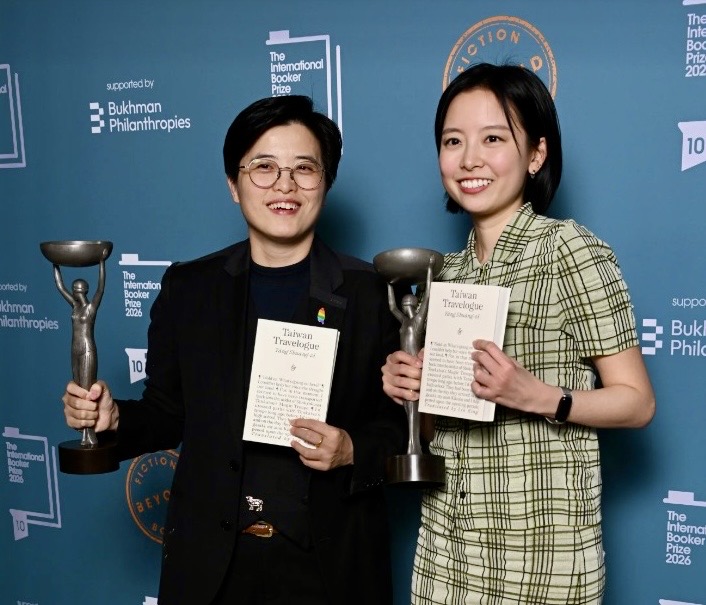
Taiwan Travelogue (臺灣漫遊錄, originally published in 2020) by Yang Shuang-zi won the International Booker Prize 2026. At a time when Taiwan remains diplomatically constrained, this is not merely a literary achievement but a geopolitical moment that underscores literature’s function in diplomacy and identity formation. It highlights how culture and translation increasingly function as instruments of soft power and international visibility.
What makes it more important is that Taiwan Travelogue is the first work translated from Mandarin Chinese to win the International Booker Prize. And, it does not emerge from mainland China, but rather comes from a society whose political status remains disputed and cultural presence has grown increasingly with global visibility. The symbolism here is difficult to ignore.
For many decades, conversations around “Chinese literature” were dominated by writers associated with the mainland. The Nobel Prize in Literature was awarded to Mo Yan in 2012, confirming this perception. So, the victory of Taiwan Travelogue signals an important shift. It suggests that global literary culture is becoming more attentive to the plurality of Sinophone works that include, but are not limited to, Taiwanese, Hong Kong, and diasporic narratives.
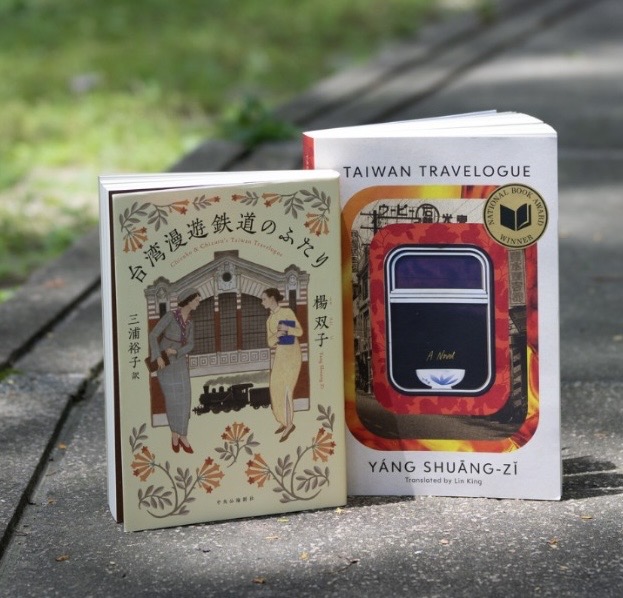
This matters more because Taiwan Travelogue itself resists narrow categorisations. Written as a fictional translation of a forgotten Japanese travel book, the novel focuses on two women’s travel and food experiences in colonial Japanese Taiwan. The author uses Food, travel, and memory as tools to investigate various aspects such as power, empire, class, gender, and identity. The Taiwan represented in the text is neither exclusively “Chinese” nor purely “Japanese.” In fact, it emerges as a layered cultural space shaped by overlapping histories, languages, and colonial encounters. In this sense, the novel contributes to what scholars increasingly call “Sinophone literature” rather than simply “Chinese literature.” The term “Sinophone” recognises the diversity of Chinese-language communities across different political and cultural locations. Taiwan’s literary tradition can no longer be defined only in terms of the Chinese nation-state. Its experience with Japanese colonial rule, democracy, indigenous culture, and contemporary politics depicts a unique literary consciousness.
Thus, the Booker Prize becomes not merely a site of a literary accolade but also an instrument of cultural capital. Literary prizes today serve as an instrument of global recognition. It immediately influences translation, academia, publishing, media, and social media discussions. As Joseph Nye’s concept of “soft power” suggests, cultural recognition often enhances international legitimacy beyond formal diplomacy. For Taiwan, which remains excluded from several international organisations, institutions like the Booker Prize provide cultural visibility and alternative means of international engagement through literature and translation.
One contradiction to current global politics is that sovereignty does not travel as freely as culture does. Although Taiwan faces restrictions in securing diplomatic recognition as a country, its films, technologies, songs, and literature have been successfully circulating worldwide. Thus, through cultural capital associated with awards such as the International Booker Prize, Taiwan seeks to assert and consolidate its presence on the global stage.
Moreover, the International Booker Prize divided its prize money equally between the author and the translator, highlighting the importance of translation in contemporary literature. In essence, the International Booker Prize portrayed the importance of translation as an inherently political act through which local histories enter the global dialogue.
This becomes particularly significant given the historically selective geopolitical and publishing circuits through which the Asian literatures have entered the English-speaking world. The popularity of the Taiwan Travelogue shows that readers are increasingly open to engaging with stories that challenge preconceived notions of Asia, colonialism, and identities.
The timing of the award itself becomes relevant in this context. Globally, literature is currently being repositioned as of intense political significance. From discussions on censorship and nationalism to issues of translation and historical memory, books have become increasingly politicised as forums for ideological discourse. Literary prizes cannot, therefore, remain apolitical. Consciously or not, they now often come laden with such symbolism. But that should not detract from the literary quality of this book, nor should one assume that geopolitics is the deciding factor in its Booker win. Doing so would diminish the literary achievement of both the writer and the translator – Lin King. Similarly problematic will be ignoring its geopolitical significance.
In other words, the significance of Taiwan Travelogue, therefore, lies not only in literary excellence, but also in what its recognition reveals about the changing relationship between culture and international legitimacy. In an increasingly fragmented geopolitical order, literary institutions are becoming important arenas through which questions of identity, representation, and global visibility are negotiated. The future of world literature may no longer be organised around singular national canons, but around interconnected, multilingual, and politically complex literary worlds. In that sense, the 2026 International Booker Prize is not only about a book. It is about who gets to represent a language, a history, and a culture before the world. For Taiwan, the implications extend beyond literary recognition. The success of Taiwan Travelogue shows how translating books and boosting cultural production can help international engagement. This is especially important when formal diplomatic room is limited. Navigating a tough international scene means Taiwan needs to keep investing in literary translations, cultural exchanges, and global publishing partnerships. These might be just as vital as usual diplomatic efforts. So, winning the Booker Prize isn’t the end, but an opportunity for Taiwan to further consolidate its cultural presence on the global stage.
About the author:
Dr. Nishit Kumar is Assistant Professor at the Subhas Chandra Bose Chair of International Relations, Chanakya University, Bengaluru. He holds a Ph.D. from Jawaharlal Nehru University and was an ICS-Harvard-Yenching Institute Doctoral Fellow at Harvard University as well as at Peking University. His research interests include China Studies, India-China relations, Chinese literature, translation studies, media narratives, and soft power. He is a published translator of Chinese literary works into Hindi and has previously served as a Research Fellow at the Centre for Contemporary China Studies, Ministry of External Affairs, Government of India.