Activities

National Youth Day Observed at Chanakya University

Date : January 12th, 2026

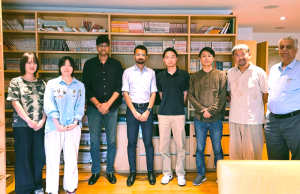
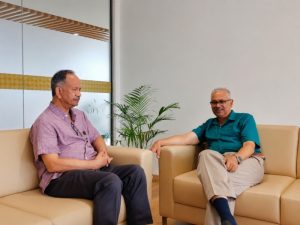
Chanakya University observed National Youth Day through the commemoration of Vivekananda Jayanti, reflecting on Swami Vivekananda’s enduring message to India’s youth. The programme was held in the presence of the Founding Chancellor, Shri M. K. Sridhar, Vice-Chancellor Prof. Yashavantha Dongre, and senior members of the University leadership, with participation from Student Affairs, faculty, and staff across schools. The observance emphasised the role of youth in nation-building, self-discipline, and service to society. Drawing from Swami Vivekananda’s vision of education as a means of inner strength and social transformation, the occasion encouraged students to pursue excellence with purpose, integrity, and a sense of responsibility towards the larger community. 

Expert Talk by Dr. Shashi Gujar

Date : January 2nd, 2026

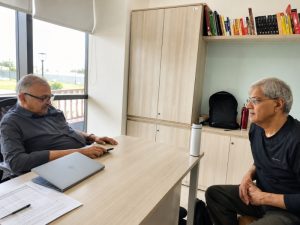
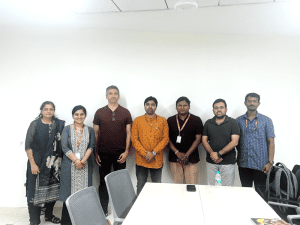
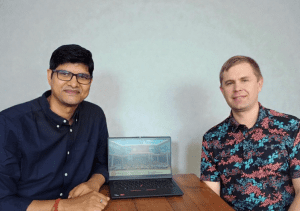
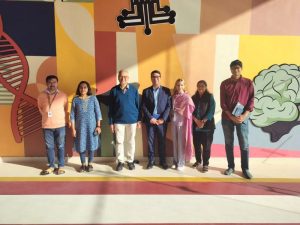
Dr. Shashi Gujar, Professor in the Department of Pathology, Faculty of Medicine, at Dalhousie University, Canada, visited SBS and delivered an engaging talk on cancer Immunotherapeutics.  He introduced the audience to the basic principles of how the immune system can be harnessed to fight cancer. He discussed the broad idea of training and activating immune responses against tumors, the challenges posed by immune evasion, and the promise of immunotherapy as a transformative approach in cancer treatment. The talk was aimed at providing a conceptual understanding rather than technical details, making it accessible and informative for students from diverse academic backgrounds.

Dr Gujar also interacted with the faculty members and discussed the potential of collaborations across different research areas. The visit provided valuable insights into contemporary approaches in cancer immunotherapy and opened avenues for academic interaction and potential collaborative research.

International Conference on Bharatiya Management (ICBM 2025) 

Date : December 23rd, 2025

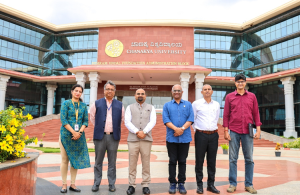
The International Conference on Bharatiya Management (ICBM 2025) was held on 22–23 December 2025 at Chanakya University, Bengaluru, organised by the School of Management Sciences. The conference brought together scholars, academicians, and practitioners to critically examine the relevance and application of Bharatiya Knowledge Systems (BKS) in management, leadership, governance, education, sustainability, and workplace well-being. 

The conference commenced on 22 December at the Preksha Auditorium with a formal inaugural session. Prof. Yashvantha Dongre delivered the welcome address, followed by the introduction of dignitaries by Prof. Anilkumar Garag. Prof. Ramakrishna Pejathaya presented the Chanakya Supersite curtain raiser. Plenary Lecture I was delivered by Prof. V. G. Narayan, who emphasized ethical leadership, values-based decision-making, and the civilizational roots of Bharatiya management thought. The session concluded with a vote of thanks by Prof. Maruthi Suresh. 

Day 1 featured three research tracks. Track 1 on Bharatiya Leadership, Ethics, and Decision-Making, chaired by Prof. Narayani Ramachandran and Prof. Ashok H. S., examined leadership and ethics through texts such as the Bhagavad Gita, Odia Bhagabata, and the Mahabharata. Track 2 on Civilizational Thought and Governance, chaired by Prof. Sandeep Nair and Dr. Meera Baindur, discussed concepts including the Dharmic Scorecard, Indic governance models, and civilization libertarianism. Track 3, chaired by Dr. Sowmya Kini and Dr. Ananthasharma B. G., focused on integrating Indic wisdom with modern frameworks such as stakeholder theory and the McKinsey 7S model. The day concluded with cultural performances and a gala dinner. 

Day 2 opened with a plenary lecture by Prof. H. G. Parsa on the purpose of education from a Bharatiya perspective. Track 4 on Sustainability and Responsible Business, chaired by Prof. Rajeev Tripathi and Prof. Naveen Bhat, explored dharmic approaches to CSR, ESG, Karma Yoga, and Lokasangraha. A panel discussion on “Reimagining Management Education through Bharatiya Knowledge Systems,” moderated by Prof. Bhavani M. R., featured Smt. Saiswaroopa Iyer, Prof. Vivekananda Dimbam, Dr. Vithal Potdar, and Prof. Rajendrakumar Joshi. Track 5 on Workplace Spirituality and Well-being was chaired by Prof. Manoj Kamat and Prof. Suresh Maruthi. An online track on Evidence-Based Bharatiya Management was chaired by Prof. Rama Malladi. 

The valedictory session featured the conference report by Dr. Deepak Kumar Tripathi, certificate distribution by Prof. Rajendra Kumar Bandi, Prof. Sushant T. Joshi, and Prof. H. G. Parsa, and a vote of thanks by Dr. Sowmya G. S. ICBM 2025 successfully advanced scholarly dialogue on Bharatiya management and laid a strong foundation for future research and curriculum innovation. 

Research Presentation at SBC(I) 94th Annual Meeting

Date : December 18th, 2025

Dr. Krishna Kurthkodi and Dr. Priyadarshan Kinatukara, faculty members of the SBS, actively participated in the 94th Annual Meeting of the Society of Biological Chemists (India) [SBC(I)], held at the University of Hyderabad, Telangana from December 17–19, 2025. The meeting was conducted as an international conference on the theme “Biological Communications in Disease and Development.”

Dr. Krishna presented a research poster titled “Generation of genetic diversity by mycobacterial error-prone DNA polymerase DnaE2.” Dr. Priyadarshan showcased his work titled “Heterochirality – Mechanisms Regulating Fate of Glycerol” during the poster sessions.

The presentations attracted considerable interest from researchers working in microbial genetics, DNA repair, infectious disease biology, lipid biochemistry, and enzymology, leading to productive scientific discussions and valuable feedback.

A Strategic Reset: Ambassador Ashok K. Kantha Delivers Insightful Lecture on ‘Towards Neighbourhood First 2.0’ and Launches Edited Volume, “Reconstructing India’s Worldview: A Strategic Realignment”

Date : December 11th, 2025

A Strategic Reset: Ambassador Ashok K. Kantha Delivers Insightful Lecture on ‘Towards Neighbourhood First 2.0’ and Launches Edited Volume, “Reconstructing India’s Worldview: A Strategic Realignment”
Subhash Chandra Bose Chair in International Relations, hosted the latest thought-provoking edition of the Distinguished Lecture Series (DLS), featuring Sri Ashok K. Kantha, (Former Ambassador of India to China). Addressing faculty members, students, and distinguished guests at the Indian Institute of World Culture, Bengaluru, Amb. Kantha delivered an engaging and insightful exploration of India’s evolving foreign policy and the dynamics shaping its regional engagement.

The gathering was framed by two significant milestones. Firstly, the event served as a sincere tribute to the late Ambassador P.S. Raghavan, whom the speaker described as a respected friend and accomplished diplomat whose wisdom seemed boundless. He had previously held the position of Chairperson of the Advisory Council of the Subhas Chandra Bose Chair in International Relations. Secondly, the occasion marked Amb. Kantha’s formal entry as the inaugural chair professor of the SCB Chair on International Relations at the University, a role rooted in the vision of a strategically autonomous and globally engaged India.

Amb. Kantha, whose diplomatic career spanned over 38 years with a specialization in India’s neighbourhood and extended neighbourhood, presented a “hard-headed, operationally oriented argument for a reset” of India’s regional strategy. He clarified that the aim was not a pan to past achievements, but a candidate diagnosis of where the original Neighbourhood First 1.0 policy succeeded and where it came short in confronting the geopolitical realities of our time, including the rise of China.
Crucially, the Ambassador dismissed the popular notion that India can transcend its neighbourhood on its journey towards Viksit Bharat 2047, asserting instead that the periphery is not a “detachable appendage” but the “very keel of his strategic vessel”.

The lecture focused on ten interlinked propositions designed to guide India’s conduct. The most vital proposition for Neighbourhood First 2.0 is making economic partnership the strategic centerpiece, shifting the policy emphasis from assistance towards creating a common economic space. Amb. Kantha argued that India, as the fastest-growing large economy, can offer non-reciprocal arrangements to integrate neighbours into its growth story, thereby increasing the “cost of antagonism”. This reset requires prioritizing resilient connectivity, including digital, rail, road, and power grid links, which must be designed with political risk mitigation and local ownership.

Other key suggestions included institutionalizing India’s proven capacity as a “first responder” during crises, but always respecting sovereignty, and strategically tackling bilateral irritants such as the fishery issue with Sri Lanka through technical, enforceable solutions. Regarding the China challenge, which views South Asia as its strategic periphery, the strategy must be predicated on leveraging India’s own strengths and synergies to persuade neighbours not to ignore India’s core security interests. Amb. Kantha emphasized the need for India to act as a “partner and not a patron,” demonstrating political courage, institutional reform, and operational competence in its execution.

The event concluded with a question-and-answer session and the unveiling of the edited volume, Reconstructing India’s Worldview: A Strategic Realignment, edited by Dr Chetan Singai and Gargi Shanbhag which originated from a roundtable ‘India’s Engagement with the World’ in June 2024. The successful lecture reaffirmed the commitment of Chanakya University and the Subhas Chandra Bose Chair to advancing scholarship in international relations.

Faculty Publication Highlight

Date : December 11th, 2025

Dr. Krishna Kurthkodi, Associate Professor at the School of Biosciences, has authored an editorial titled Bacterial population heterogeneity, stress response and antibiotic tolerance in the Frontiers in Cellular and Infection Microbiology. The editorial discusses how phenotypic diversity and stress-adaptive responses within bacterial populations contribute to antibiotic tolerance and persistent infections, offering insights relevant to addressing the growing challenge of antimicrobial resistance.

1 2 3 52

Join hand with us today! Extend your support to develop Global Vision.

Support Chanakya

Choose Chanakya for Learning through Experience for a Life of Excellence.

Apply as Student

Join us to lead a Culture of Learning and Leadership.

Apply as faculty