
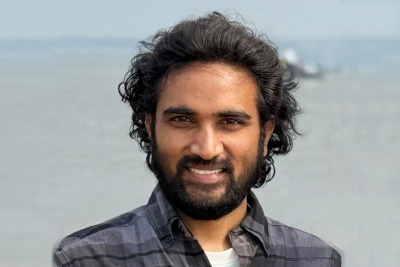
K.V. Satish
Ph.D., Indian Space Research Organisation (National Remote Sensing Centre) in affiliation with Andhra University. Postdoctoral Research: G.B. Pant National Institute of Himalayan Environment. Institute of Environment and Sustainable Development-Banaras Hindu University.K.V. Satish
Ph.D., Indian Space Research Organisation (National Remote Sensing Centre) in affiliation with Andhra University. Postdoctoral Research: G.B. Pant National Institute of Himalayan Environment. Institute of Environment and Sustainable Development-Banaras Hindu University.My research focuses on ecology, biodiversity conservation, remote sensing, ecological modelling, and global change biology. I work at the intersection of field ecology, geospatial technologies, and environmental data science to understand how ecosystems respond to major environmental and anthropogenic pressures. My broader aim is to develop integrated approaches to quantify ecological change, identify its drivers, and support informed decision-making.
Using in-situ observations, space-based Earth observations, artificial intelligence, and ecological modelling, I develop innovative methods, datasets, and tools to quantify biodiversity patterns and assess ecosystem status and dynamics across spatial and temporal scales.
My key areas of expertise include plant diversity and taxonomy, global change ecology, biodiversity modelling, macroecology and biogeography, species distribution and habitat suitability modelling, conservation prioritisation, forest and watershed management, carbon sequestration and biomass estimation, Essential Biodiversity Variables (EBVs), ecosystem restoration, and invasive species assessment. I am especially interested in integrating biodiversity data and ecological models to improve assessments of ecosystem condition and conservation priorities.
My research contributes to national and global environmental priorities, including India’s National Biodiversity Strategy and Action Plan, the Kunming-Montreal Global Biodiversity Framework, the Sustainable Development Goals (SDGs), and broader agendas for ecosystem restoration and climate action. Through interdisciplinary research, I aim to bridge the gap between science, policy, and practice and translate ecological evidence into effective conservation action and sustainable development.
I am equally committed to mentoring and capacity building, supporting the next generation of environmental scientists in conducting interdisciplinary, technology-enabled research to address pressing ecological and sustainability challenges.
Dr. K.V. Satish is an ecology and remote sensing scientist who has worked at leading national institutions, including the Indian Space Research Organisation (ISRO), G.B. Pant National Institute of Himalayan Environment, and Banaras Hindu University.
He has published 40 peer-reviewed papers in leading journals, including Journal of Environmental Management, Biodiversity and Conservation, Global and Planetary Change, Biological Invasions, and Geocarto International, has authored four books and several book chapters. He has extensive field experience across the Himalayas, the Western and Eastern Ghats, Kachchh Desert, central Indian forests, Deccan plateau, and Indian mangroves.
His major contributions include characterising plant diversity in the Nilgiri Biosphere Reserve (NBR) and identifying forest-conservation priorities for NBR and Andhra Pradesh. He contributed to India’s first national forest-burnt-area product and long-term databases on forest cover change, forest types, and fragmentation for SAARC countries and Myanmar. He co-developed Spatial Decision Support Systems for invasive-species management, advanced Essential Biodiversity Variables for GEO BON, and improved species-distribution models for the Himalayas through novel remote sensing variables, supporting conservation policy and the Sustainable Development Goals.
He serves as a reviewer for several high-impact journals and previously served as Guest Associate Editor for Frontiers in Forests and Global Change.
- Ph.D., in Environmental Sciences, Indian Space Research Organisation (National Remote Sensing Centre) in affiliation with Andhra University.
- Postdoctoral Research: G.B. Pant National Institute of Himalayan Environment. Institute of Environment and Sustainable Development-Banaras Hindu University.
Journal Publications
[1] K.V. Satish, P.K. Srivastava, M.D. Behera, M.L. Khan, S. Gwal, S.K. Srivastava, “Ensemble of machine learning and global circulation models coupled with geospatial databases for niche mapping of Bell Rhododendron under climate change,” Geocarto Int., vol. 39, no. 1, pp. 1–7, 2024.
[2] A. S. Anjitha, C. S. Reddy, S. S. N. Nitish, K. V. Satish, and V. A. Smitha, “Estimating above-ground biomass of trees outside forests using multi-frequency SAR data in the semi-arid regional landscape of southern India,” Spatial Inf. Res., vol. 32, pp. 593–605, 2024.
[3] R. Fararoda, R. S. Reddy, G. Rajashekar, T. Mayamanikandan, P. Mutyala, K. V. Satish, S. W. Pasha, and C. S. Jha “Improving Above Ground Biomass Estimation in Tropical Indian Forests,” Ecol. Inform., vol. 81, p. 102621, 2024.
[4] C. S. Reddy and K. V. Satish, “Assessment of tree density, tree cover, species diversity and biomass in Semi-arid human dominated landscape using large-area inventory and remote sensing data,” Anthropocene Sci., vol. 2, pp. 97–211, 2024.
[5] Z. A. Wani, S. Khan, K. V. Satish, S. M. Haq, S. Pant, and S. Siddiqui, “Ensemble modelling reveals shrinkage of suitable habitat for Himalayan Boxwood (Buxus wallichiana Bail.) under climate change – implications for conservation,” Phytocoenologia, vol. 52, no. 1, pp. 55–69, 2024.
[6] K. R. L. Saranya, K. V. Satish, and C. S. Reddy, “Remote sensing enabled Essential Biodiversity Variables for Invasive Alien Species management -Towards the Development of Spatial Decision Support System,” Biol. Invasions, vol. 26, no. 4, pp. 943–951, 2024.
[7] S. Pant, J. A. Bhat, Z. A. Wani, K. V. Satish, and V. S. Negi, “Editorial: Mountainous Forest Ecosystems: Challenges and Management Implications,” Front. For. Glob. Change, vol. 6, p. 1300020, 2023.
[8] C. S. Reddy, K. V. Satish, K. R. L. Saranya, N. N. S. Surya, P. A. Neha, and G. Rajashekar, “Harnessing Essential Biodiversity Variables and Remote Sensing of Earth Observations – Synthesizing Biodiversity Insights,” Spatial Inf. Res., vol. 32, no. 3, pp. 265–276, 2023.
[9] K. V. Satish, V. Dugesar, M. K. Pandey, P. K. Srivastava, D. S. Pharswan, and Z. A. Wani, “Seeing from space makes sense: Novel earth observation variables accurately map species distributions over Himalaya,” J. Environ. Manage., vol. 325, p. 116428, 2023.
[10] Z. A. Wani, V. S. Negi, J. A. Bhat, K. V. Satish, A. Kumar, S. Khan, R. Dhyani, S. Siddiqui, R. N. Al-Qthanin, and S. Pant, “Elevation, aspect, and habitat heterogeneity determine plant diversity and compositional patterns in the Kashmir Himalaya,” Front. For. Glob. Change, vol. 6, p. 1019277, 2023.
[11] Z. A. Wani, J. A. Bhat, V. S. Negi, K. V. Satish, S. Siddiqui, and S. Pant, “Conservation Priority Index of species, communities and habitats for biodiversity conservation and management planning; a case of Gulmarg Wildlife Sanctuary, Kashmir Himalaya,” Front. For. Glob. Change, vol. 5, pp. 21–36, 2023.
[12] K. R. L. Saranya, K. K. Mandal, T. Kar, C. S. Reddy, and K. V. Satish, “Effects of Disturbance Regimes on Phytodiversity of Similipal Biosphere Reserve, India,” J. Indian Soc. Remote Sens., vol. 51, pp. 1213–1226, 2023.
[13] V. Dugesar, K. V. Satish, M. K. Pandey, P. K. Srivastava, G. P. Petropoulos, A. Anand, and M. D. Behera, “Impact of Environmental Gradients on Phenometrics of Major Forest Types of Kumaon Region of the Western Himalaya,” Forests, vol. 13, no. 12, p. 1973, 2022.
[14] Z. A. Wani, T. Islam, K. V. Satish, K. Ahmad, S. Dhyani, and S. Pant, “Cultural value and vegetation structure of Buxus wallichiana Bail. in Rajouri-Poonch region of Indian Himalayan Region (VSI: Mountainous Regions),” Trees, For. People, vol. 7, p. 100182, 2022.
[15] Priyanka Maiti, J. C. Kuniyal, K. C. S. Sekar, K. V. Satish, Dalbeer Singh, Nisha Bisht, Anand Kumar, S. C. Arya, Mahesha Nand, and R. C. Sundriyal, “Landscape level ecological assessment and eco-restoration strategies for alpine and sub-alpine regions of the Central Himalaya,” Ecol. Eng., vol. 180, p. 106674, 2022.
[16] Z. A. Wani, K. V. Satish, T. Islam, K. Ahmad, and S. Pant, “Population status, threats and habitat suitability of Buxus wallichiana Bail.: A Highly Valuable Endemic Species of Himalaya,” Vegetos, vol. 36, pp. 583–590, 2021.
[17] S. Thakur, V. S. Negi, R. Dhyani, K. V. Satish, and I. D. Bhatt, “Vulnerability assessments of mountain forest ecosystems: a global synthesis,” Trees, For. People, vol. 6, p. 100156, 2021.
[18] J. P. Rao, K. V. Satish, S. B. Padal, C. S. Reddy, and V. S. Raju, “Morinda cochinchinensis (Rubiaceae): a new record to Andhra Pradesh, India,” J. Econ. Taxon. Bot., vol. 43, no. 1–4, pp. 65–69, 2020.
[19] S. B. Padal, K. V. Satish, J. P. Rao, M. T. Naidu, and K. Satyavathi, “Corallodiscus Batalin (Gesneriaceae): A New Generic Record For southern India,” Natl. Acad. Sci. Lett., vol. 43, pp. 579–584, 2020.
[20] C. S. Reddy, S. V. Pasha, K. V. Satish, A. Unnikrishnan, S. B. Chavan, C. S. Jha, P. G. Diwakar, and V. K. Dadhwal, “Quantifying and predicting multi-decadal forest cover changes in Myanmar: a biodiversity hotspot under threat,” Biodivers. Conserv., vol. 28, pp. 1129–1149, 2019.
[21] K. V. Satish and J. P. Rao, “Taxonomic and habitat update to Phyllanthus narayanswamii (Phyllanthaceae): an endemic and endangered species from southern India,” Phytotaxa, vol. 414, no. 1, pp. 19–28, 2019.
[22] C. S. Reddy, K. V. Satish, and P. V. V. Prasada Rao, “Significant decline of forest fires in Nilgiri Biosphere Reserve, India,” Remote Sens. Appl. Soc. Environ., vol. 11, pp. 172–185, 2018.
[23] S. B. Padal, K. V. Satish, J. P. Rao, and K. Satyavathi, “Extended Distribution of Endemic Medicinal Tree Species Pittosporum dasycaulon (Pittosporiaceae) to Northern Eastern Ghats, Andhra Pradesh, India,” J. Econ. Taxon. Bot., vol. 41, no. 1–2, pp. 70–73, 2018.
[24] C. S. Reddy, K. R. L. Saranya, S. V. Pasha, K. V. Satish, C. S. Jha, P. G. Diwakar, V. K. Dadhwal, P. V. N. Rao, and Y. V. N. Krishna Murthy, “Assessment and monitoring of deforestation and forest fragmentation in South Asia since the 1930s,” Glob. Planet. Change, vol. 161, pp. 132–148, 2017.
[25] K. V. Satish and J. P. Rao, “A new species of Emilia Cass. (Asteraceae) from the Eastern Ghats of India with notes on ecosystem evaluation and conservation status,” J. Asia Pac. Biodivers., vol. 10, no. 1, pp. 104–111, 2017.
[26] C. S. Reddy, S. V. Pasha, K. V. Satish, K. R. L. Saranya, C. S. Jha, and Y. V. N. Krishna Murthy, “Quantifying nationwide land cover and historical changes in forests of Nepal (1930–2014): implications on forest fragmentation,” Biodivers. Conserv., vol. 27, pp. 91–107, 2017.
[27] C. S. Reddy, C. S. Jha, G. Manaswini, V. V. L. Padma Alekhya, S. V. Pasha, K. V. Satish, P. G. Diwakar, and V. K. Dadhwal, “Nationwide assessment of forest burnt area in India using Resourcesat-2 AWiFS data,” Curr. Sci., vol. 112, no. 7, pp. 1521–1532, 2017.
[28] S. Singh, C. S. Reddy, S. V. Pasha, K. Dutta, K. R. L. Saranya, and K. V. Satish, “Modeling the spatial dynamics of deforestation and fragmentation using Multi-Layer Perceptron neural network and landscape fragmentation tool,” Ecol. Eng., vol. 99, pp. 543–551, 2017.
[29] C. S. Reddy, K. V. Satish, C. S. Jha, P. G. Diwakar, Y. V. N. Krishna Murthy, and V. K. Dadhwal, “Development of deforestation and land cover database for Bhutan (1930–2014),” Environ. Monit. Assess., vol. 188, no. 12, p. 658, 2016.
[30] C. S. Reddy, K. V. Satish, S. V. Pasha, C. S. Jha, and V. K. Dadhwal, “Assessment and monitoring of deforestation and land-use changes (1976-2014) in Andaman and Nicobar Islands, India using remote sensing and GIS,” Curr. Sci., vol. 111, no. 9, pp. 1492–1499, 2016.
[31] J. P. Rao, K. V. Satish, C. S. Reddy, and O. A. Kumar, “Achyranthes longifolia (Makino) Makino (Amaranthaceae): An Angiosperm New to India,” Natl. Acad. Sci. Lett., vol. 40, pp. 57–60, 2016.
[32] C. S. Reddy, G. Manaswini, K. V. Satish, S. Singh, C. S. Jha, and V. K. Dadhwal, “Conservation priorities of forest ecosystems: Evaluation of deforestation and degradation hotspots using geospatial techniques,” Ecol. Eng., vol. 91, pp. 333–342, 2016.
[33] J. P. Rao and K. V. Satish, “Persicaria perfoliata (L.) H. Gross (Polygonaceae): A species new to Eastern Ghats of India,” Trop. Plant Res., vol. 3, no. 2, pp. 249–252, 2016.
[34] C. S. Reddy, C. S. Jha, V. K. Dadhwal, P. H. Krishna, S. V. Pasha, K. V. Satish, K. Dutta, K. R. L. Saranya, F. Rakesh, G. Rajashekar, and P. G. Diwakar, “Quantification and monitoring of deforestation in India over eight decades (1930–2013),” Biodivers. Conserv., vol. 25, no. 1, pp. 93–116, 2016.
[35] K. V. Satish and C. S. Reddy, “Long Term Monitoring of Forest Fires in Silent Valley National Park, Western Ghats, India Using Remote Sensing Data,” J. Indian Soc. Remote Sens., vol. 44, no. 2, pp. 207–215, 2016.
[36] S. V. Pasha, K. V. Satish, C. S. Reddy, and C. S. Jha, “Massive Invasion of Mesquite (Prosopis juliflora) in Wild Ass Wildlife Sanctuary, India,” Natl. Acad. Sci. Lett., vol. 38, no. 3, pp. 271–273, 2015.
[37] K. V. Satish, S. V. Pasha, P. H. Krishna, and C. S. Reddy, “Achyranthes coynei Santapau (Amaranthaceae): An Endemic and Threatened Species from Kachchh Desert, India,” Natl. Acad. Sci. Lett., vol. 38, no. 3, pp. 281–282, 2015.
[38] J. P. Rao, K. V. Satish, B. S. Sankar, C. S. Reddy, and O. A. Kumar, “On the occurrence of parasitic plant Balanophora fungosa JR Forster & G. Forster (Balanophoraceae) in Andhra Pradesh, India,” J. Threatened Taxa, vol. 7, no. 2, pp. 6943–6946, 2015.
[39] S. V. Pasha, K. V. Satish, C. S. Reddy, P. V. V. P. Rao, and C. S. Jha, “Satellite image based quantification of invasion and patch dynamics of mesquite (Prosopis juliflora) in Great Rann of Kachchh, Kachchh Biosphere Reserve, Gujarat, India,” J. Earth Syst. Sci., vol. 123, no. 7, pp. 1481–1490, 2014.
[40] K. V. Satish, K. R. L. Saranya, C. S. Reddy, P. H. Krishna, C. S. Jha, and P. V. V. P. Rao,“Geospatial assessment and monitoring of historical forest cover changes (1920–2012) in Nilgiri Biosphere Reserve, Western Ghats, India,” Environ. Monit. Assess., vol. 186, no. 12, pp. 8125–8140, 2014.
Book Chapters
[41] K. V. Satish, S. V. Pasha, and C. S. Reddy, “Spatial conservation prioritization of landscapes in Nilgiri Biosphere Reserve, Western Ghats,” in Biodiversity of Hotspots of India – Volume 1 Western Ghats – Sri Lanka, T. Pullaiah, Ed. USA: Apple Academic Press, 2024, pp. 383–403. ISBN: 978-1-77491-255-3.
[42] P. Harikrishna and K. V. Satish, “Spatial patterns and Distribution of Vegetation types and Forest Fragmentation in Bassi Wildlife Sanctuary, Rajasthan, India,” in Exploring Emerging Techniques in Plant Sciences, S. Suthari, Ed. Hanamkonda, India: Vaagdevi Degree & PG College, 2023. ISBN: 978-93-5406-563-7.
[43] M. Tamilelakkiya, C. S. Reddy, G. Bhaskaran, and K. V. Satish, “Evaluating the Impact of Forest Policies through the Geospatial Assessment of Forest cover change,” in Exploring Emerging Techniques in Plant Sciences, S. Suthari, Ed. Hanamkonda, India: Vaagdevi Degree & PG College, 2023. ISBN: 978-93-5406-563-7
[44] A. Gupta, P. K. Srivastava, K. V. Satish, A. Chauhan, and P. C. Pandey, “Challenges and Future Possibilities Toward Himalayan Forest Monitoring,” in Advances in Remote Sensing for Forest Monitoring, P. C. Pandey and P. Arellano, Eds. John Wiley & Sons Ltd., 2023. ISBN: 9781119788126.
Conference Full Papers
[45] C. S. Reddy et al., “Earth Observation based Forest Monitoring and Conservation in Biodiversity Hotspots of South Asia,” in Proc. 38th Asian Conf. Remote Sens. (ACRS 2017), New Delhi, India, Oct. 2017, p. 161.
[45] K. V. Satish, R. Darshan, and P.G. Diwakar “Development of a water quality monitoring system for Bengaluru’s urban and peri-urban lakes using decade-long satellite time series observations,” accepted in 47th Asian Conf. Remote Sens. (ACRS 2026), New Delhi, India, Oct. 2026.
Books
[46] K. V. Satish, C. S. Reddy, K. Ezhilmathi, and N. Parvathi, Flora of NACIN campus, Palasamudram. Hyderabad/Bengaluru, India: National Remote Sensing Centre and National Academy of Customs, Indirect Taxes & Narcotics, 2024. ISBN: 978-93-6039-018-1.
[47] S. Pant, J. A. Bhat, Z. A. Wani, K. V. Satish, and V. S. Negi, Eds., Mountainous forest ecosystems: Challenges and management implications. Lausanne, Switzerland: Frontiers in Forests and Global Change, 2023. ISBN 978-2-8325-3891-3.
[48] C.S. Reddy, A.O. Varghese, and K.V. Satish et al., Biodiversity Characterisation at Community level in India using Earth Observation Data. Hyderabad, India: National Remote Sensing Centre, Indian Space Research Organisation, 2021. ISBN – 978-93-5391-467-7.
[49] C.S. Reddy, K.R.L. Saranya, P.H. Krishna, S.V. Pasha, K.V. Satish, and C.S. Jha, Flora of NRSC Shadnagar Campus. Hyderabad, India: National Remote Sensing Centre, Indian Space Research Organisation, 2014.
Projects
Watershed-based approach for Sustenance
Lake Water Quality Monitoring System
Memberships
Member, Indian Society of Remote Sensing
Member, Indian Association for Angiosperm Taxonomy
Member, Indian Society of Geomatics
Member, Group on Earth Observations Biodiversity Observation Network (GEOBON)
Certifications
Drone pilot certification for micro category drones
12-week training on “Remote Sensing and GIS Technology Applications” NRSC/ISRO.
Scientific Paper Writing and Statistical Analysis Using R
Environmental Data Analytics using Python
APSET in Life Sciences
- ResearchGate: https://www.researchgate.net/profile/Koppineedi-Satish
- Google Scholar: https://scholar.google.co.in/citations?user=xMdhSdgAAAAJ&hl=en
- ORCID: https://orcid.org/0000-0001-6772-3914
- Loop: https://loop.frontiersin.org/people/470694/overview
- Scopus: https://www.scopus.com/authid/detail.uri?authorId=56428948700
- Web of Science: https://www.webofscience.com/wos/author/record/35817896
- Sage Policy Profile: https://policyprofiles.sagepub.com/profile/8022/k.v.-satish
- Public Outreach & Engagement
- Trained 200+ researchers and students in Remote Sensing & GIS and Species Distribution Modelling.
- Served as a Technical Session Speaker, Invited Speaker, Session Chair, and Resource Person at conferences, workshops, and training programmes hosted by reputed institutions, including NRSC/ISRO, BHU, NIHE, BIT Mesra, and VIT.
- Research Supervision
- As Main Guide
- Internships: 10, M.Sc. Dissertations: 1
- As Co-Guide
- M.Sc. Dissertations: 6
- Beyond Academia
- I enjoy trekking, wildlife photography, archery, cooking, listening to music, birdwatching, drawing and painting, and miniature art. I also enjoy playing cricket and badminton.